A homeowner-friendly guide to choosing the right CFM, keeping noise down (sones), improving real airflow with proper ducting and makeup air, and venting safe...
I grew up holding the flashlight for my dad while he traced mystery smells through old houses, and I can tell you this: post-remodel odors are usually not “just new construction smell.” They are often a small plumbing or venting detail that got disturbed during demo, tile work, or fixture install.
The good news is you can narrow it down pretty quickly without tearing anything apart. Below are the six most common causes I see after bathroom remodels, plus a simple check and a fix you can try before you call a plumber.
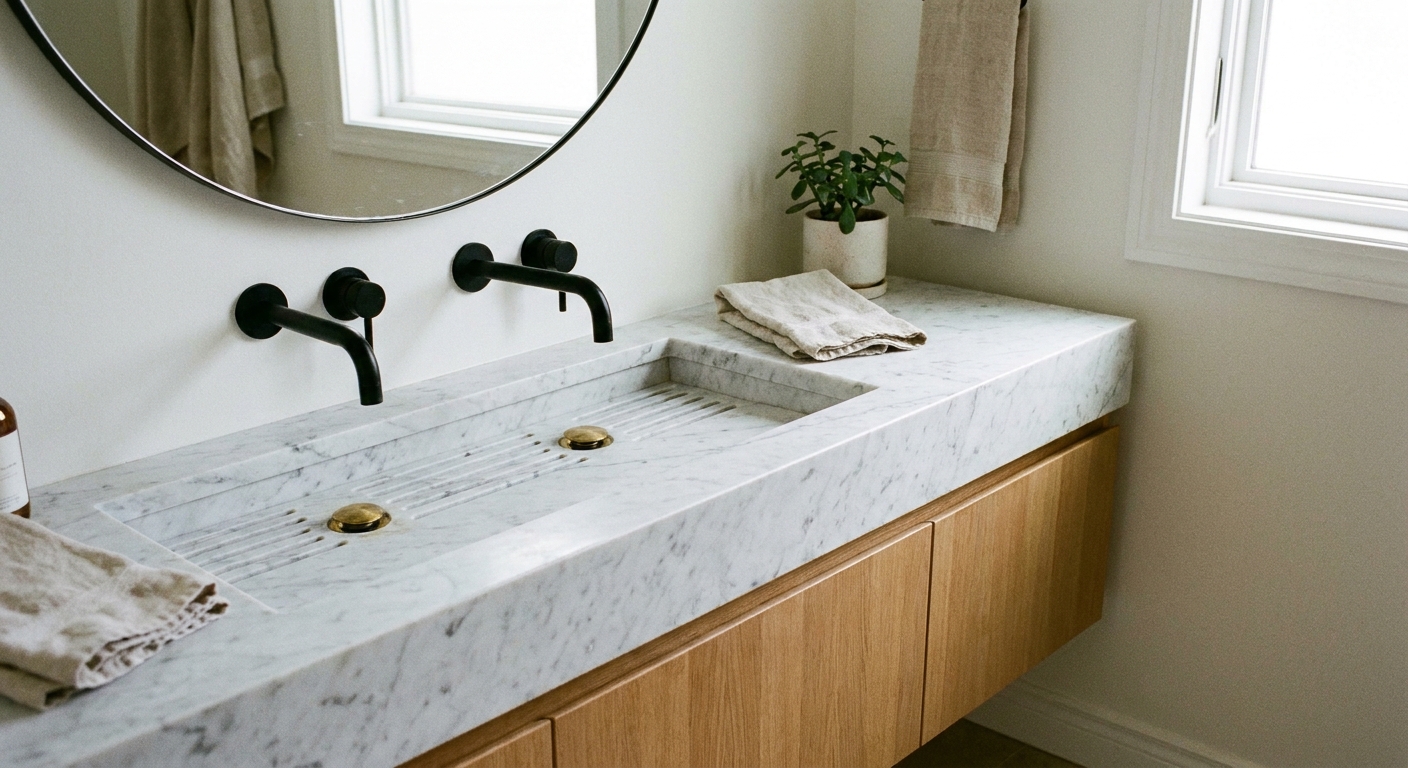
First, identify what kind of smell it is
Before you start troubleshooting, do a quick sniff test in the least gross way possible. The “type” of odor points to the system that is causing it.
- Sewer gas smell: Usually a trap issue, wax ring issue, or venting issue.
- Sulfur or rotten egg smell: Can be sewer gas, but if you have gas service or a gas appliance anywhere nearby, take a minute to rule out a gas leak first. If you suspect gas, leave the area and call your gas utility or emergency services.
- Musty, earthy, wet drywall smell: Often a small leak, wet framing, or damp grout area, especially after the first few showers.
- Plastic, chemical, hot dust smell: Frequently a new exhaust fan motor housing, new light fixture, new paint, adhesives, or caulk curing.
If the odor is strongest at a drain, toilet base, or inside a vanity, start with Causes 1 through 5. If it is strongest at the fan grille, skip to Cause 6.
Safety note: If anyone gets headaches, nausea, or dizziness around the smell, ventilate the room and step away while you figure it out. Persistent sewer gas is not a DIY badge of honor.
Cause 1: A dry P-trap
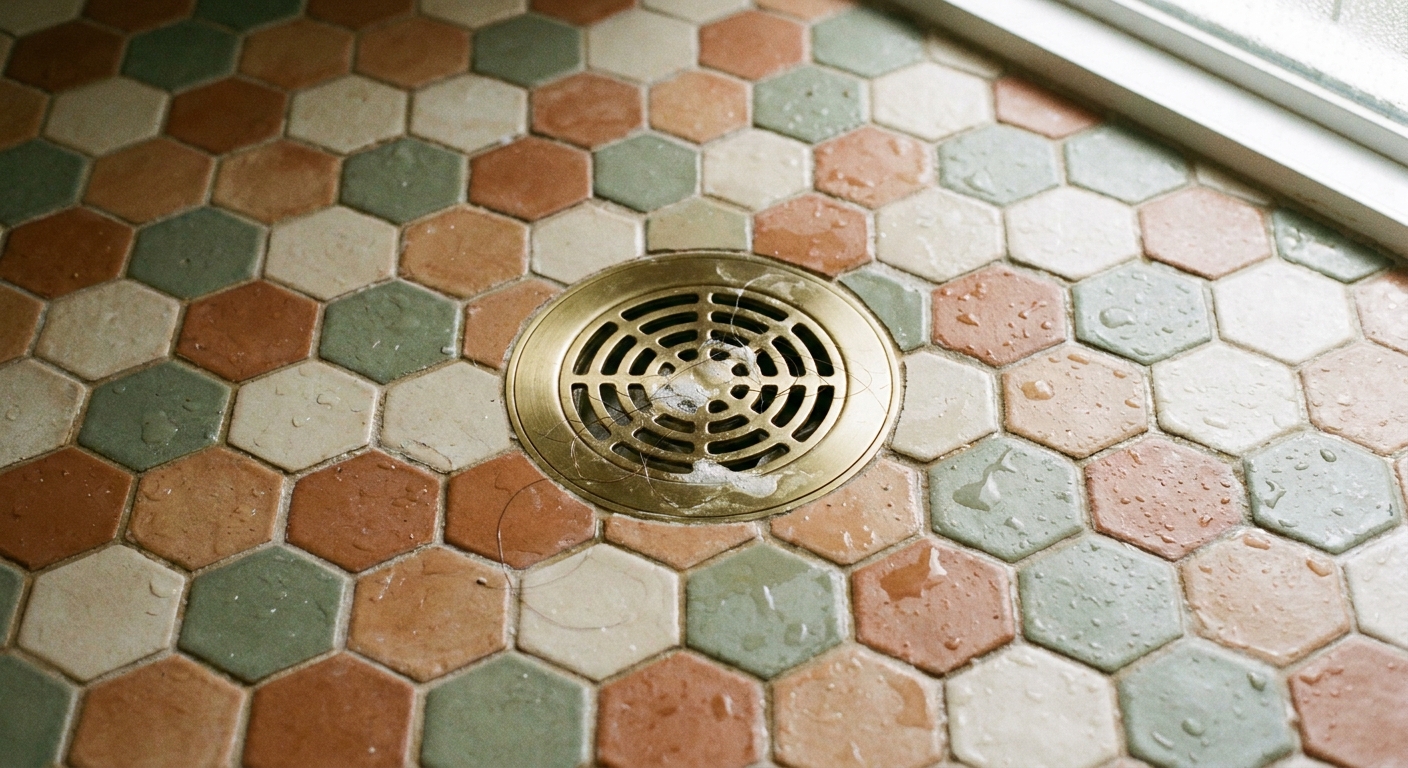
Every fixture drain should have a P-trap that holds water. That water is a seal that blocks sewer gas. After a remodel, it is common for a shower, tub, or floor drain to sit unused long enough for that water to evaporate.
Simple check
- Sniff near the shower or tub drain. If it is clearly strongest there, suspect a dry trap.
- If you have a rarely used floor drain (common in basements or curbless showers), check that too.
Fix to try
- Run water for 30 to 60 seconds in the suspect fixture.
- Wait a few minutes and smell again.
- For a floor drain that dries out often, add a little water, then pour in a tablespoon of mineral oil. The mineral oil floats and slows evaporation.
If the smell comes back quickly even with regular use, jump to the venting sections (Causes 3 and 4).
Cause 2: The toilet seal failed
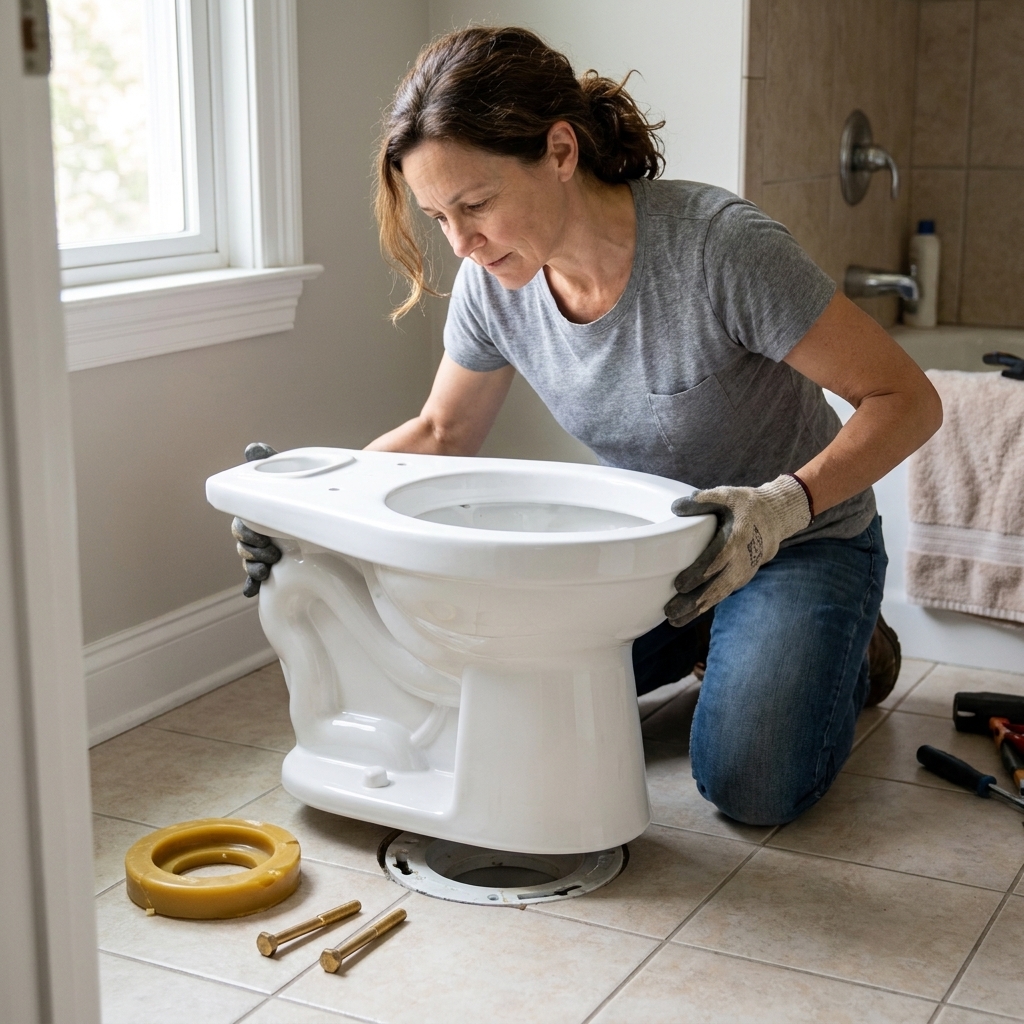
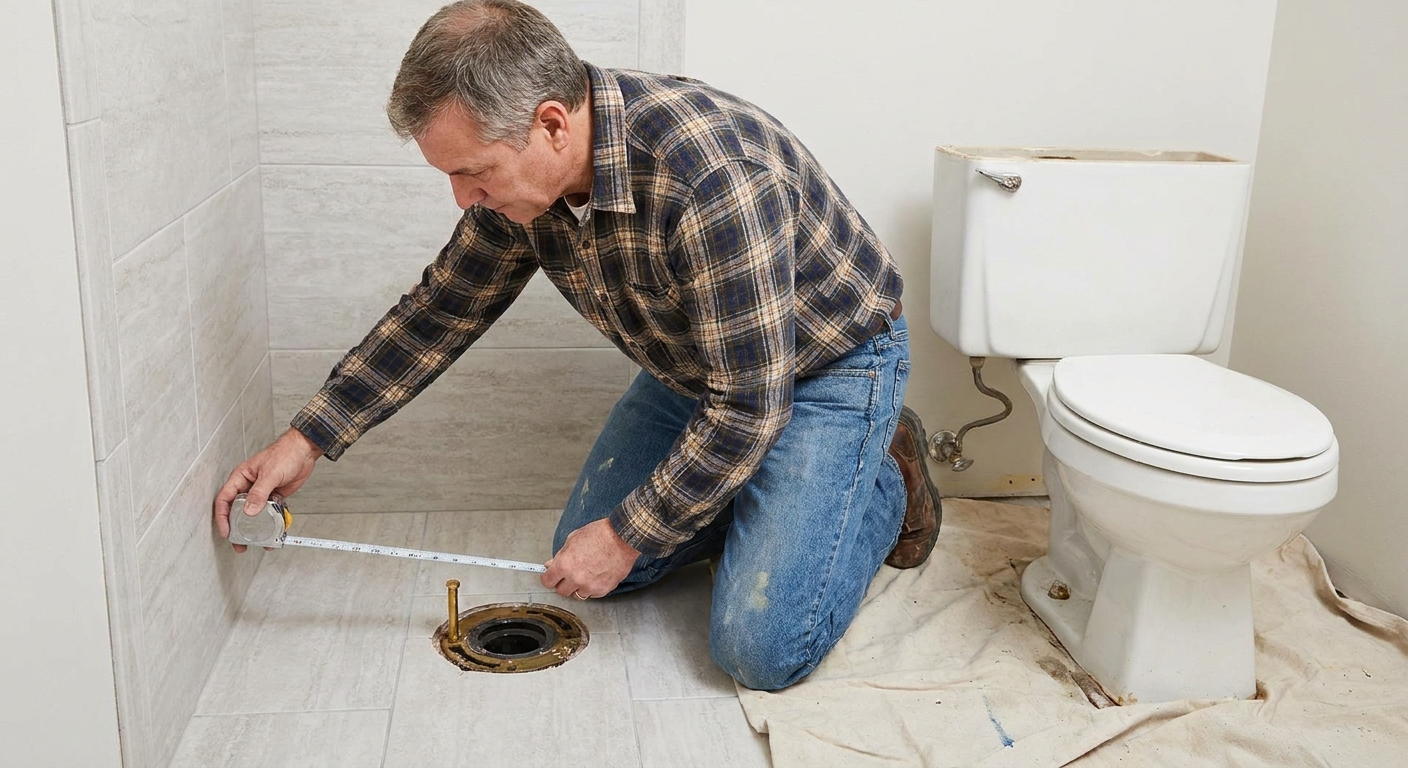
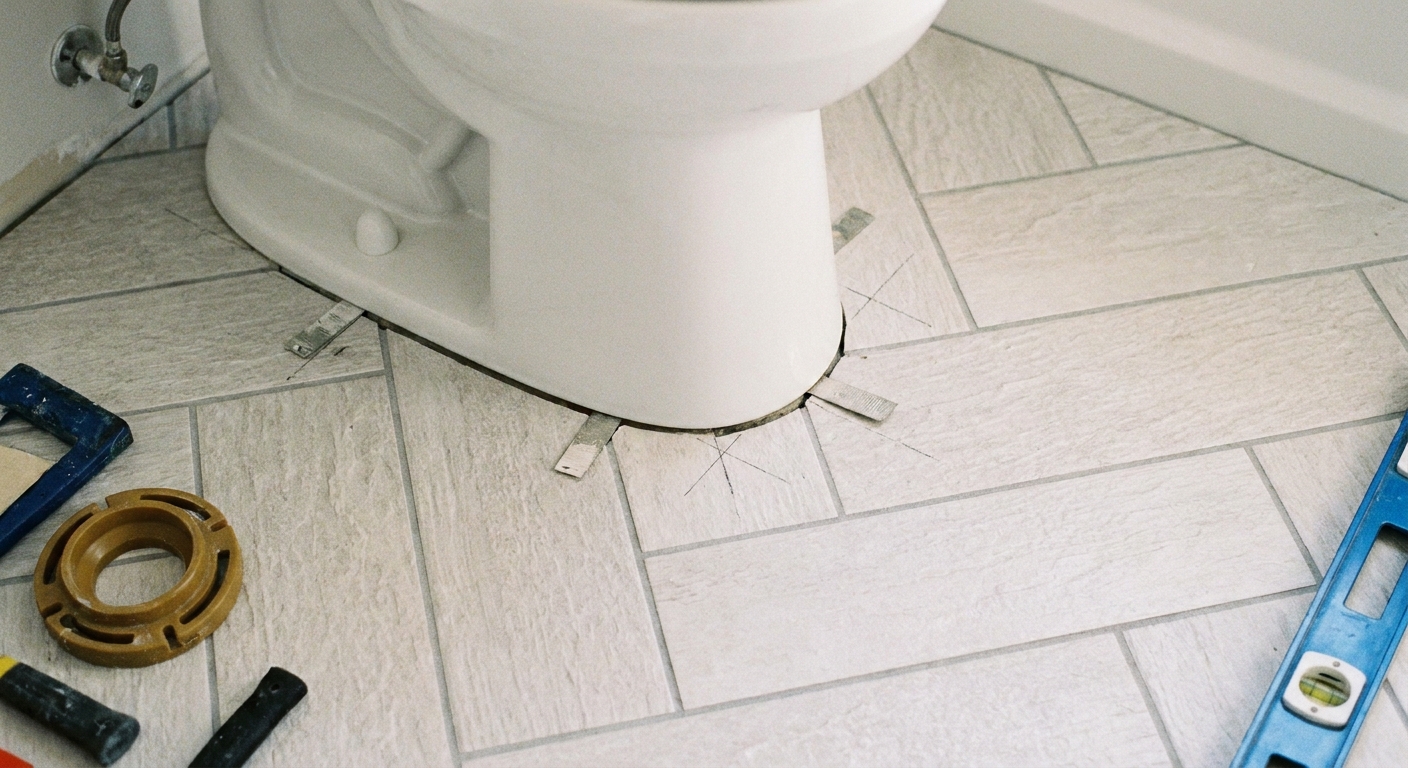
If you have sewer gas odor that seems strongest around the toilet, especially after someone flushes, I immediately suspect the wax ring (or waxless seal) at the toilet base. During remodels, flange height changes are common due to new tile thickness. That is exactly how a toilet can look “fine” but leak odor.
Simple check
- Put your nose near the toilet base (yes, I know). If it is stronger there than at the tank or bowl, that is a clue.
- Watch for subtle signs: a toilet that rocks slightly, dampness at the base, or staining that reappears after cleaning.
- If you have a basement or crawlspace below, check the ceiling below the toilet area for new discoloration.
Fix to try
- Do not solve this by adding more caulk around the base. Caulk is not a substitute for a proper seal and it can hide a leak until it becomes real damage.
- Yes, many pros do caulk the front and sides of the toilet after confirming everything is sealed correctly (often leaving a gap at the back). The key is that caulk comes after the toilet is properly set, not instead of it.
- Tighten the closet bolts carefully if the toilet is loose. Do not over-tighten and crack the porcelain.
- If it still rocks or smells, the real fix is pulling the toilet and resetting it with the correct seal and the correct flange height. Many homeowners hire this out because it is heavy and messy, but it is not a “wait and see” situation.
Call a plumber now if you see water at the base, the toilet rocks, or the smell is strong and persistent. A failed seal can leak water into your new subfloor.
Cause 3: A vent pipe is open
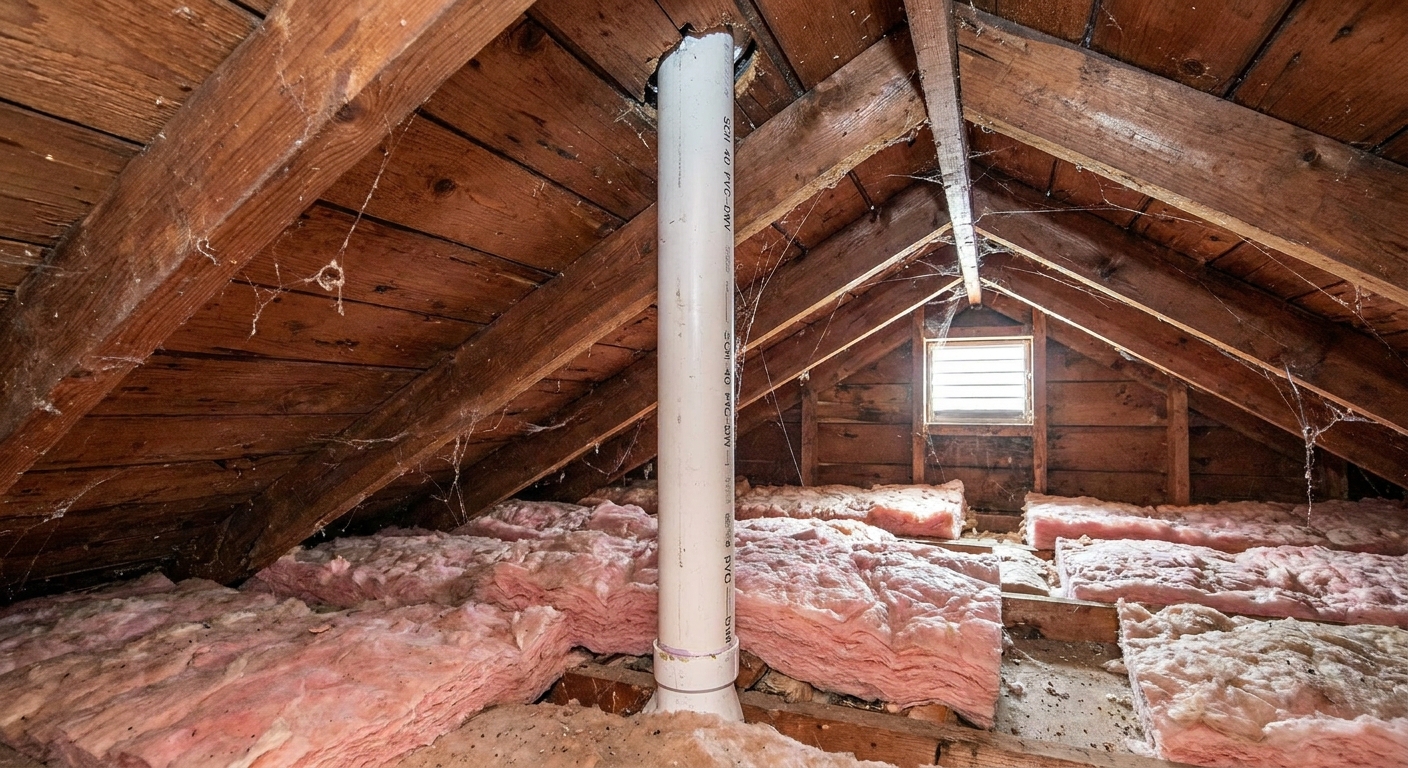
Bathroom remodels often involve opening walls and ceilings for lights, fans, moving plumbing, or patching drywall. If a vent stack was cut, cracked, or temporarily opened and not properly reconnected, sewer gas can vent right into the room or into a soffit or chase that communicates with the bathroom.
Simple check
- Does the smell seem worse near the ceiling, a soffit, or an access panel?
- Did the odor start immediately after drywall work or ceiling patching?
- If you have attic access, carefully smell in the attic area above the bathroom. Do not linger if it is strong.
Fix to try
- If you can safely access the attic, look for an open-ended pipe, disconnected coupling, or a cracked fitting near where work happened.
- Re-capping or reconnecting vent piping is not a caulk job. It typically needs the right coupling and solvent-welded PVC connections, or proper mechanical connections depending on material.
Call a plumber if you suspect an open vent in a wall or ceiling. Sewer gas is not something to ignore, and the repair often needs proper vent fitting alignment and support.
Cause 4: A bad AAV
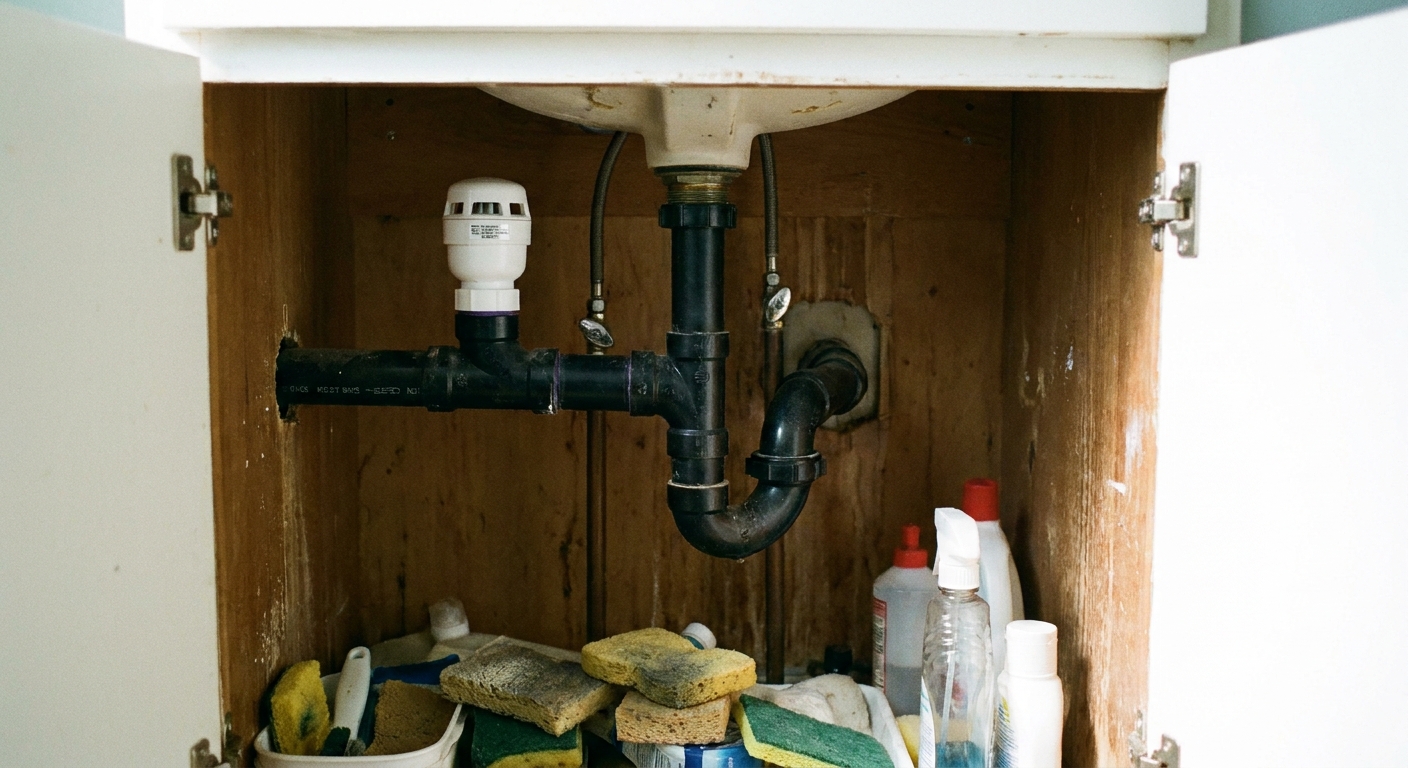
In some remodels, especially when adding a vanity where venting is tricky, installers use an air-admittance valve, sometimes called a Studor vent. It lets air in so drains flow properly, but it should not let sewer gas out. If it fails, is installed in the wrong orientation, or is buried in a sealed wall with no access, it can stink up a brand-new bathroom fast.
One more important note: AAVs are not allowed everywhere, and when they are allowed they still have to meet local code and manufacturer rules.
Simple check
- Look under the sink for a small vertical device screwed onto a pipe, usually higher than the trap arm.
- Sniff inside the vanity cabinet. If the smell is strongest in there, suspect the AAV or a drain connection inside the cabinet.
Fix to try
- Confirm it is installed upright and is above the level specified by the manufacturer, typically above the trap weir and with clearance for airflow.
- If it is clearly accessible and you are comfortable, replacing an AAV is often straightforward: shut off water to avoid accidents, remove the old valve, install the new one per directions, and keep it accessible.
Call a plumber if the AAV is hidden behind drywall or the cabinet was built without an access path. It must be accessible for replacement.
Cause 5: A partial drain blockage
This one surprises homeowners because it can happen with beautiful finish work. Silicone caulk, grout haze, drywall dust, and construction debris can partially block a drain or foul up a stopper assembly. The result is often slow draining, occasional gurgling, and odor from buildup, not because the drain “cannot breathe,” but because water and gunk hang around where they should not.
Simple check
- Listen for gurgling when the sink drains or when the toilet flushes.
- Check if the sink or tub drains slower than expected.
- Inspect the drain opening and trim: look for a visible ring of silicone, grout, or debris narrowing the opening.
- For sinks, shine a light into the overflow hole (the little opening near the top of the bowl). That channel can hold construction dust and go funky fast.
Fix to try
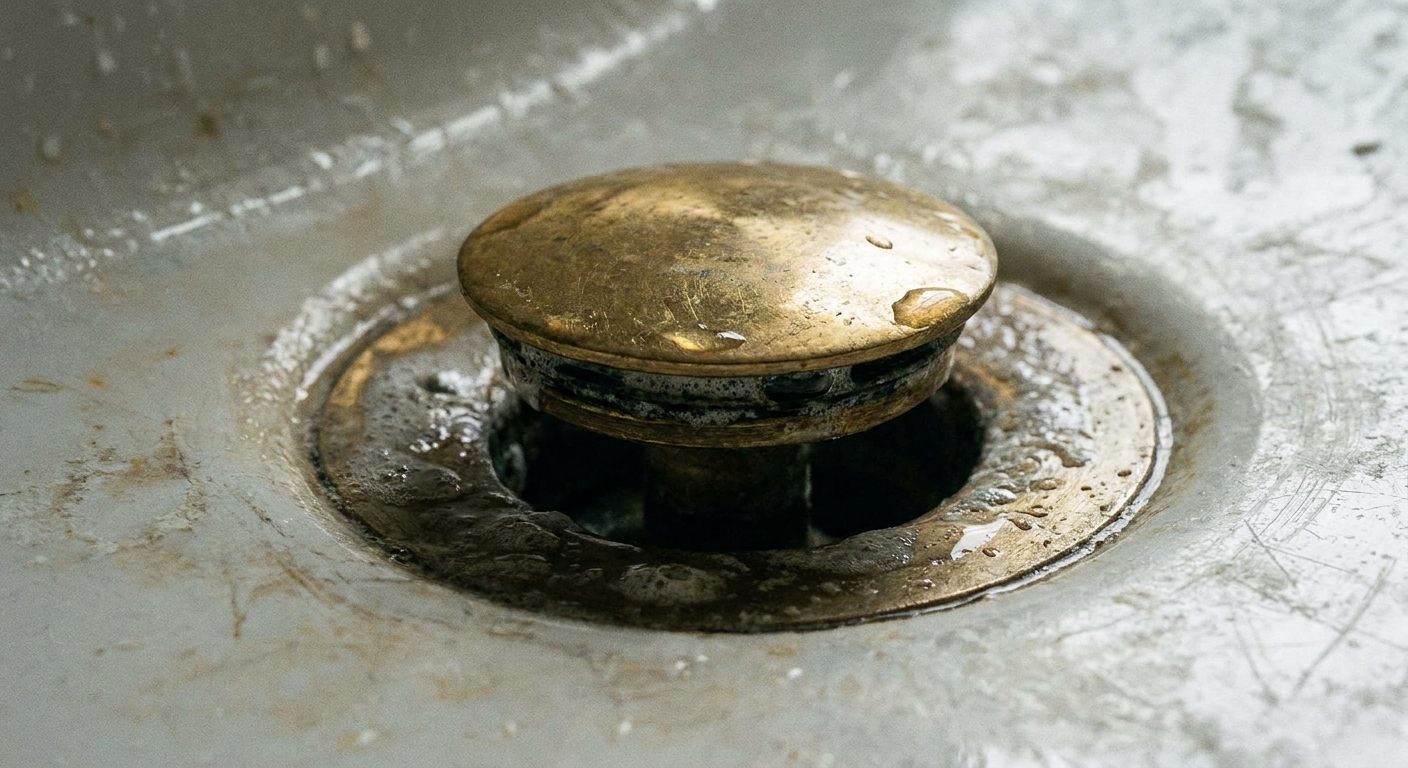
- Remove the drain cover if possible and clean the opening thoroughly.
- For sinks, remove and clean the pop-up stopper and tailpiece. Renovation dust plus hair makes a nasty plug fast.
- If you see cured caulk obstructing the opening, carefully cut it away with a plastic scraper or a utility knife, working slowly to avoid scratching finishes.
- Flush the sink overflow channel with warm soapy water (a small funnel helps), then rinse well.
If multiple fixtures gurgle, traps lose water, or you smell sewer gas after another fixture drains, that points back to a venting problem. At that point, it is plumber time.
Cause 6: The exhaust fan smell
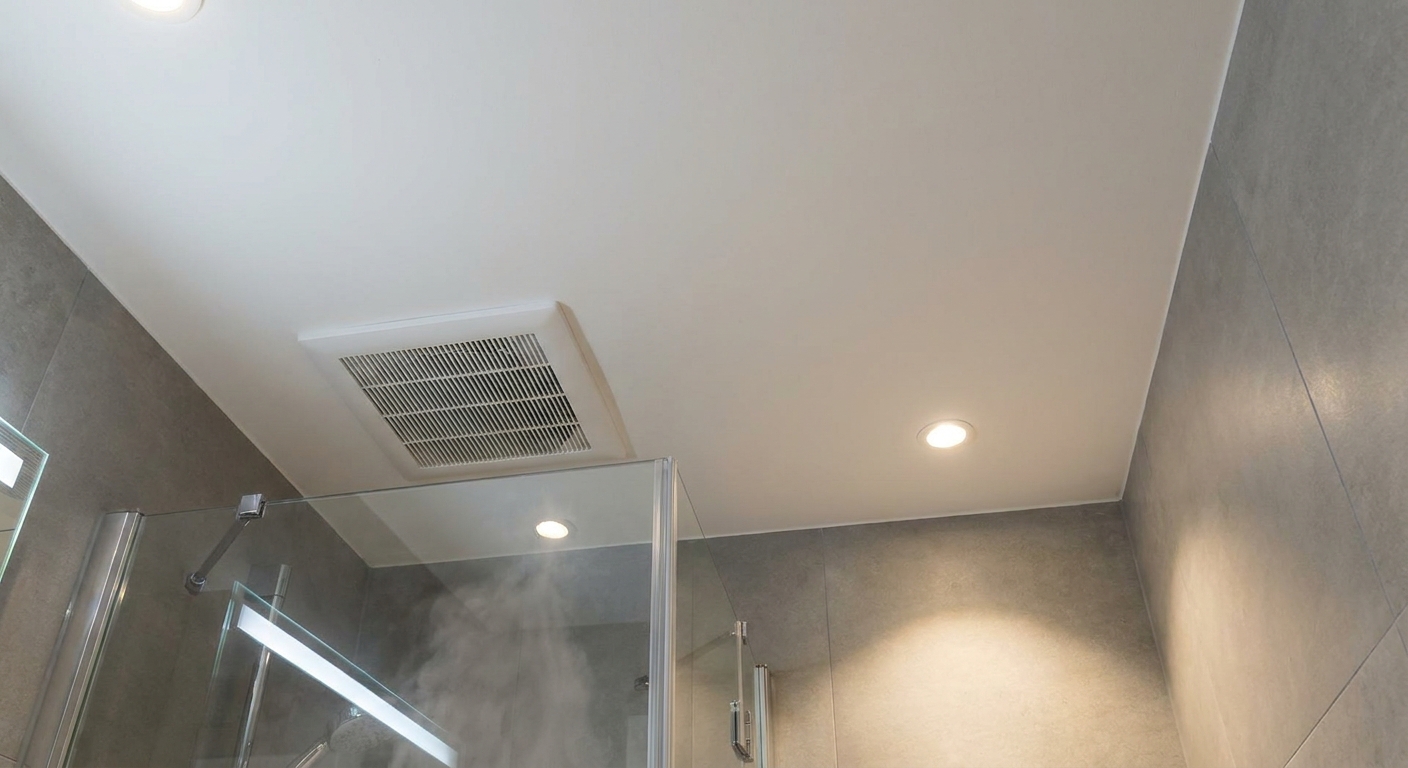
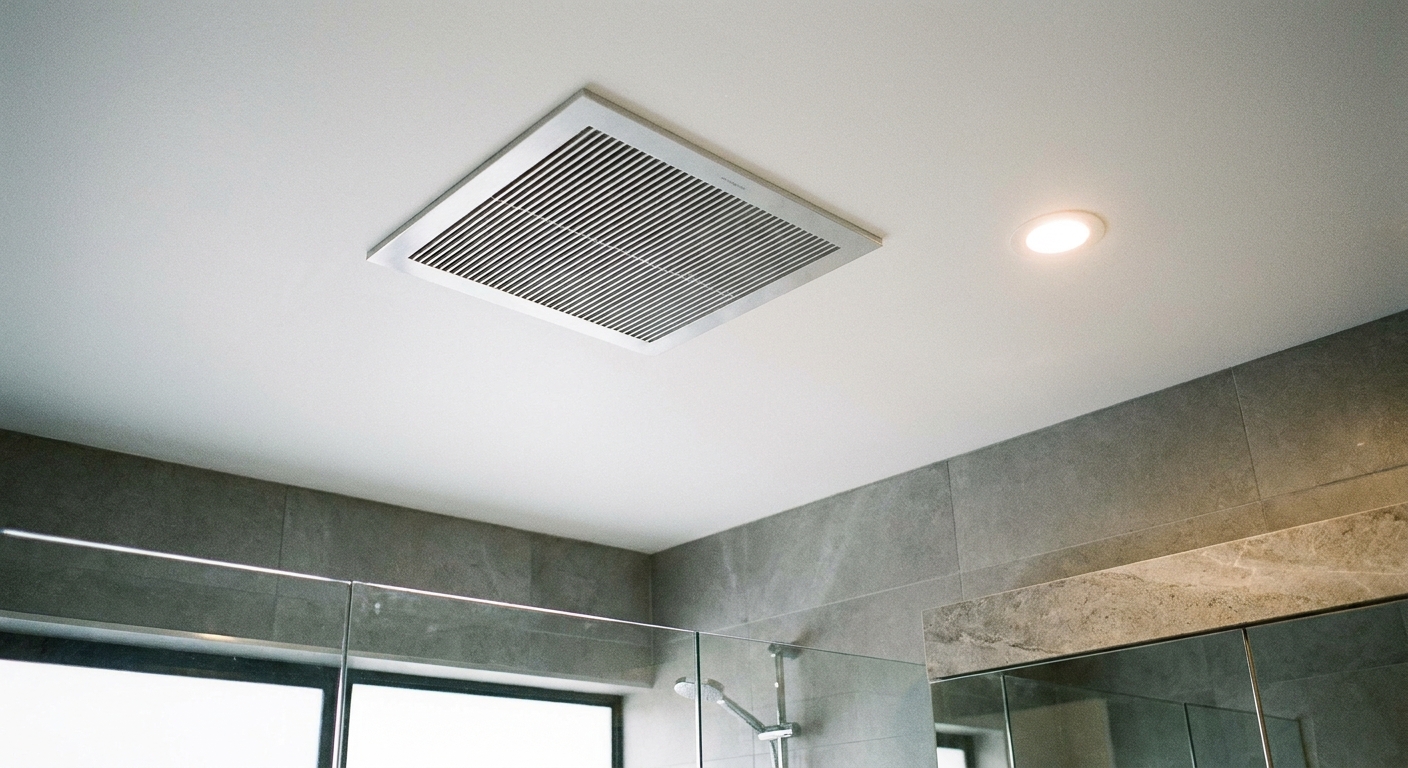
Not every “remodel smell” is plumbing. New exhaust fans can smell like hot plastic, machine oil, or warm dust for the first few uses. If the fan duct was disturbed or disconnected during the remodel, the fan can also pull air from places you do not want, like a musty attic or wall cavity.
Simple check
- Turn the fan on for 10 minutes with the bathroom door closed, then turn it off and smell near the fan grille.
- If the odor is strongest right at the fan, it is likely the fan housing or ducting.
- Hold a single sheet of toilet paper up to the fan grille while the fan is on. It should pull the paper upward. This is a quick clue, not a lab test.
Fix to try
- Run the fan for a few cycles to burn off manufacturing residues. This often resolves within a week or two of normal use.
- If the smell is musty or “attic-y,” check (or have someone check) that the fan duct is connected, sealed, and vented outside, not dumping into the attic.
- Clean construction dust from the grille and nearby ceiling area.
- If the odor is more like paint or silicone, ventilate: run the fan, crack a window if you have one, and keep the door open between uses for a few days while materials finish curing.
Call a pro if you suspect the duct is disconnected, crushed, or venting into the attic. Poor venting can cause moisture problems, not just smells.
When to call a plumber
I am all for homeowner-friendly checks, but sewer gas and hidden leaks are not the time to stay stubborn. Bring in help if:
- The smell is strong and persistent after you refill traps and clean drains.
- You suspect the toilet seal, especially if the toilet rocks or there is moisture at the base.
- Multiple drains gurgle, traps lose water, or the smell returns quickly after running water.
- You suspect an open or disconnected vent stack in a wall, ceiling, or attic.
- You find any moisture under the sink and cannot immediately explain it. Use a dry paper towel around shutoff valves, supply line connections, and drain joints to confirm even a tiny leak.
One solid service call can be cheaper than “guess and caulk” damage in a freshly remodeled bathroom.
Quick odor checklist
- Smell at shower drain: Run water to refill trap.
- Smell at toilet base: Suspect wax ring or flange height issue.
- Smell in vanity cabinet: Check AAV and drain connections, and check for small leaks with a paper towel.
- Gurgling or slow drains: Clean pop-up, clear debris, and watch for venting symptoms.
- Smell at ceiling fan: Run fan, check suction, verify duct vents outside.
- Sulfur smell with gas service: Rule out a gas leak first.