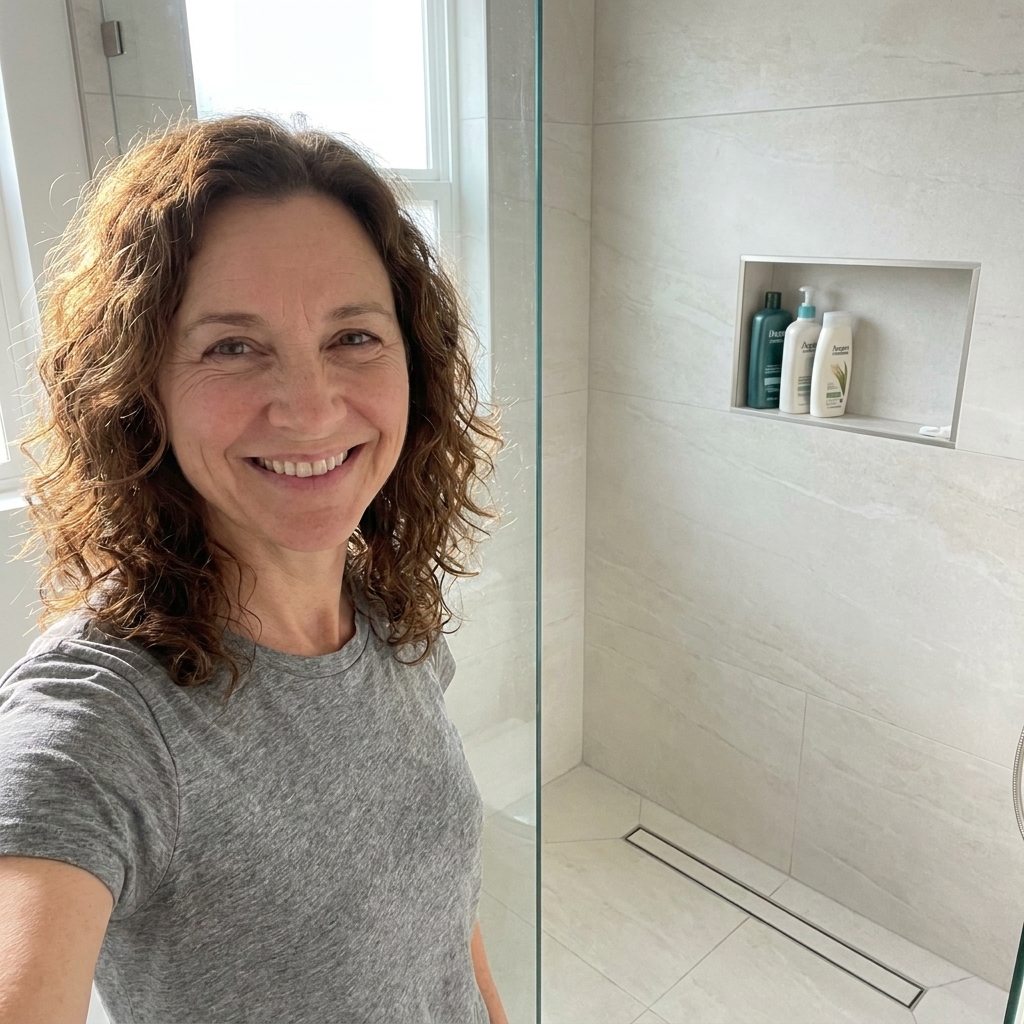
A step-by-step way to estimate labor and material costs for a powder room or small guest bath, plus smart contingency planning and splurge vs. save tips.
Bathroom makeovers are sneaky. They look small, so we assume they should be “easy DIY money savers.” Then you open the wall and discover a mystery vent, a notched stud, and plumbing that was apparently installed during a full moon.
I’m all for rolling up your sleeves. I grew up holding a flashlight for my dad under sinks and behind toilets, and I still love a good project. But bathrooms have one of the highest concentrations of trades per square foot in your house: plumbing, electrical, waterproofing, ventilation, tile, and finish carpentry all collide in a tiny space. That means the true cost difference between DIY and hiring a contractor is not just labor. It’s tools, permits, disposal, time, redo risk, and whether one tiny leak turns into a ceiling repair downstairs.
Below is a practical, contractor-level cost comparison for four big cost centers: demolition, plumbing, tile, and electrical. I’ll also show you where DIY actually wins, where it usually backfires, and how to use a hybrid approach to keep costs down without gambling with water and wiring.
Start with the real question
Costs swing wildly depending on whether you’re doing a surface refresh or moving plumbing. For budgeting, I like to put projects in three buckets:
- Refresh (cosmetic): paint, new vanity and faucet (same locations), new mirror and lights, maybe a toilet swap. Minimal wall opening.
- Replace (same layout): new tub or shower kit, new tile, new floor, new fixtures, but plumbing stays in the same general spots.
- Rebuild (layout changes): moving a shower, flipping the toilet location, converting tub to shower with custom tile, adding a niche, moving a door. This is where trades stack up and permits matter.
DIY makes the most financial sense in a refresh, can make sense in a replace if you’re skilled, and becomes risky fast in a rebuild.
Cost ranges you can use
These are ballpark national ranges for many U.S. markets for a standard hall bath (roughly 35 to 60 square feet). Your zip code, scope, and finishes will move the numbers, but the ratios between DIY and pro work tend to hold. For local validation, compare against aggregator averages (Angi, HomeAdvisor) and published remodel surveys (such as Remodeling magazine’s Cost vs. Value report), plus your municipality’s permitting pages.
At-a-glance ranges (labor + common extras)
- Demo: DIY $150 to $700 | Pro $800 to $2,500
- Plumbing: DIY $200 to $1,200 (materials only) | Licensed plumber $1,200 to $6,000+
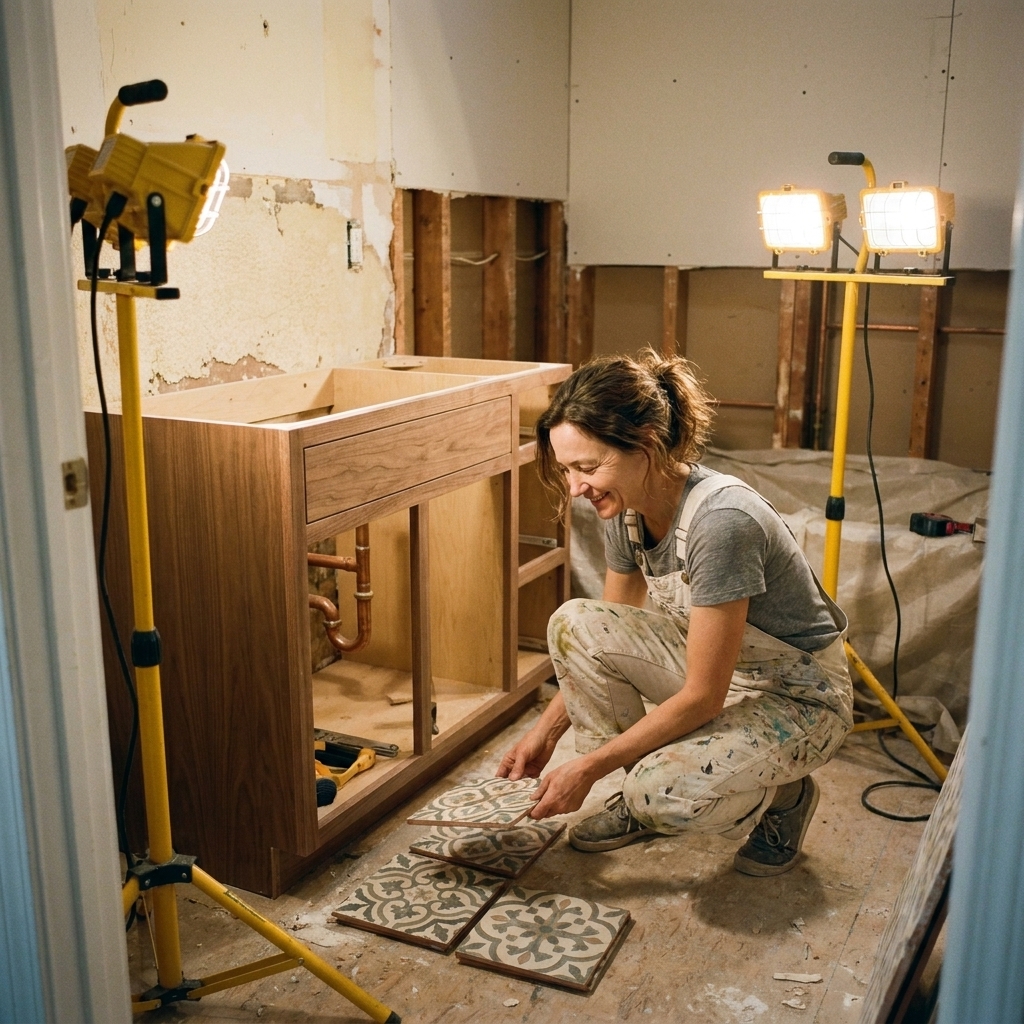
- Tile (shower and or floor): DIY $600 to $2,500 (materials + tools) | Pro tile setter $2,500 to $9,000+
- Electrical: DIY $75 to $400 (materials only, where legal) | Licensed electrician $400 to $2,500+
Notice the pattern: DIY savings are mostly labor savings. But bathrooms are where labor also buys you speed, waterproofing reliability, code compliance, and someone else’s liability insurance.
Demo
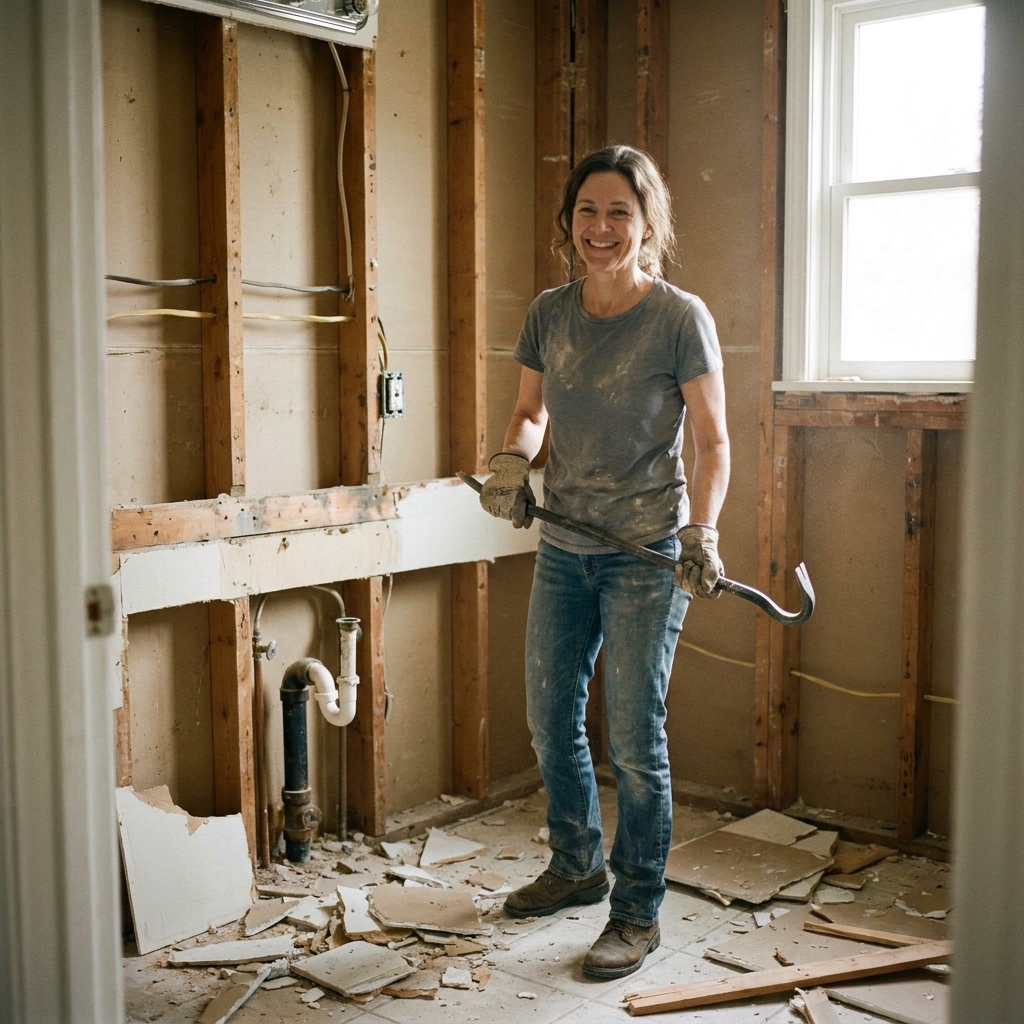
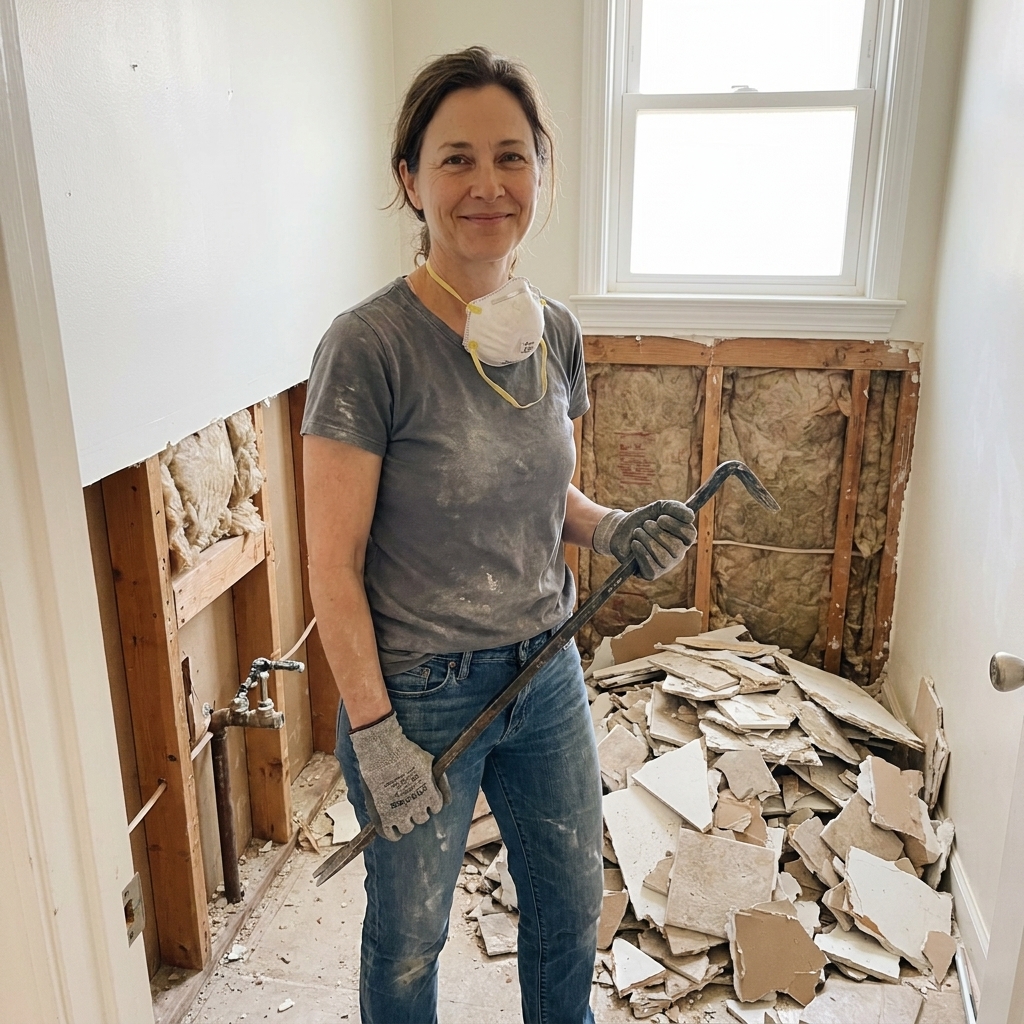
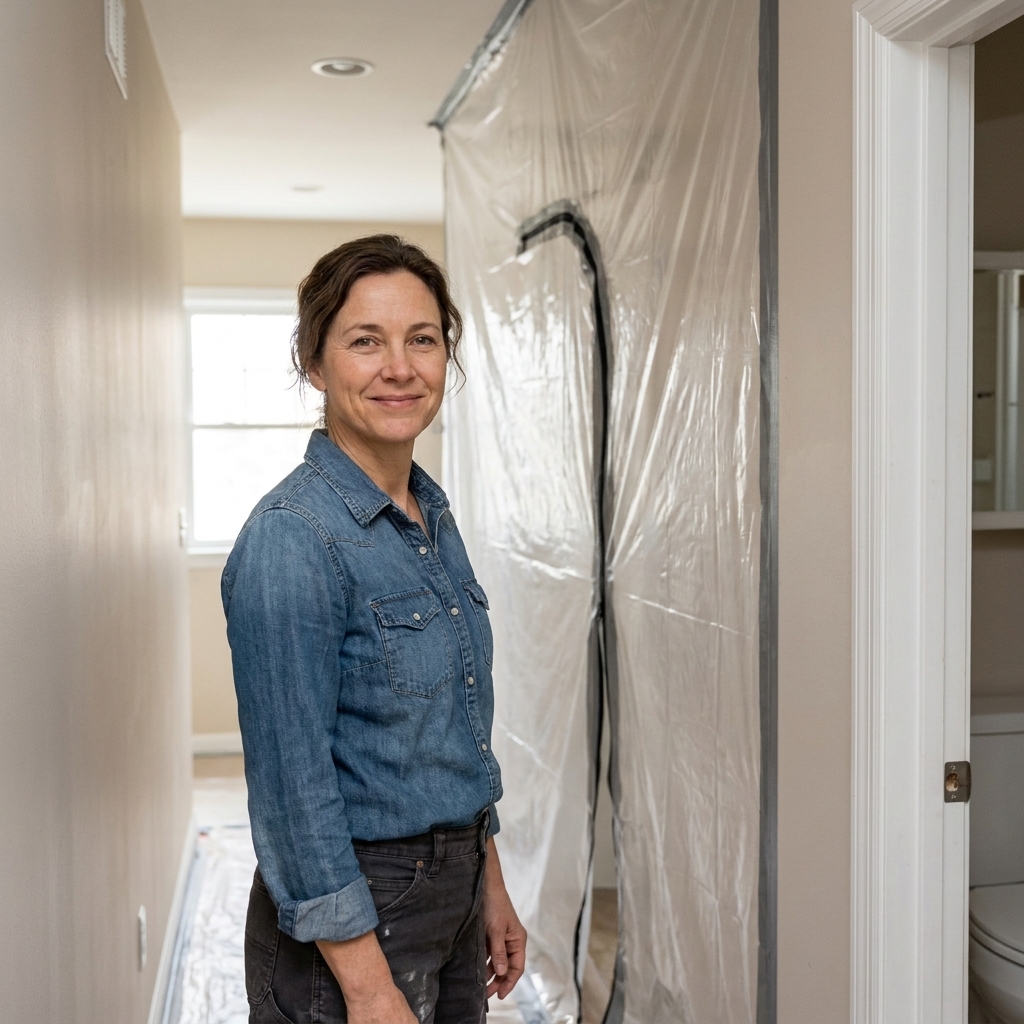
Why DIY demo saves money: It’s labor-heavy, not skill-heavy, and contractors price it to include containment, haul-out, and risk.
DIY demo costs
- Tool basics: pry bar, shop vac, utility knife, reciprocating saw blades, heavy-duty trash bags, buckets. Roughly $50 to $250 if you’re starting from scratch.
- Dust control: plastic sheeting, tape, zipper door. $30 to $120.
- Disposal: dump fees or Bagster-style pickup. Often $100 to $400 depending on volume and local pricing.
DIY demo total: typically $150 to $700.
Pro demo costs
Pros often include labor, disposal, and some level of protection for floors and hallways. Expect $800 to $2,500, higher if there’s a cast iron tub, multiple tile layers, or tricky access.
Demo landmines
- Asbestos and lead: Older vinyl sheet goods, adhesives, and some wall textures can contain asbestos. Lead paint is common pre-1978. Testing usually costs far less than remediation.
- Shutoffs: Know how to shut off water to the room and the whole house. Have caps and a plan before you remove anything connected to plumbing.
- Don’t demo structure: If a wall might be load-bearing, stop and verify before cutting studs to “make room” for a niche.
Plumbing
Plumbing is where DIY savings can evaporate quickly. The cost is not just parts. It’s access, diagnosis, and knowing what your local code will accept.
When DIY plumbing makes sense
- Swapping a faucet or showerhead
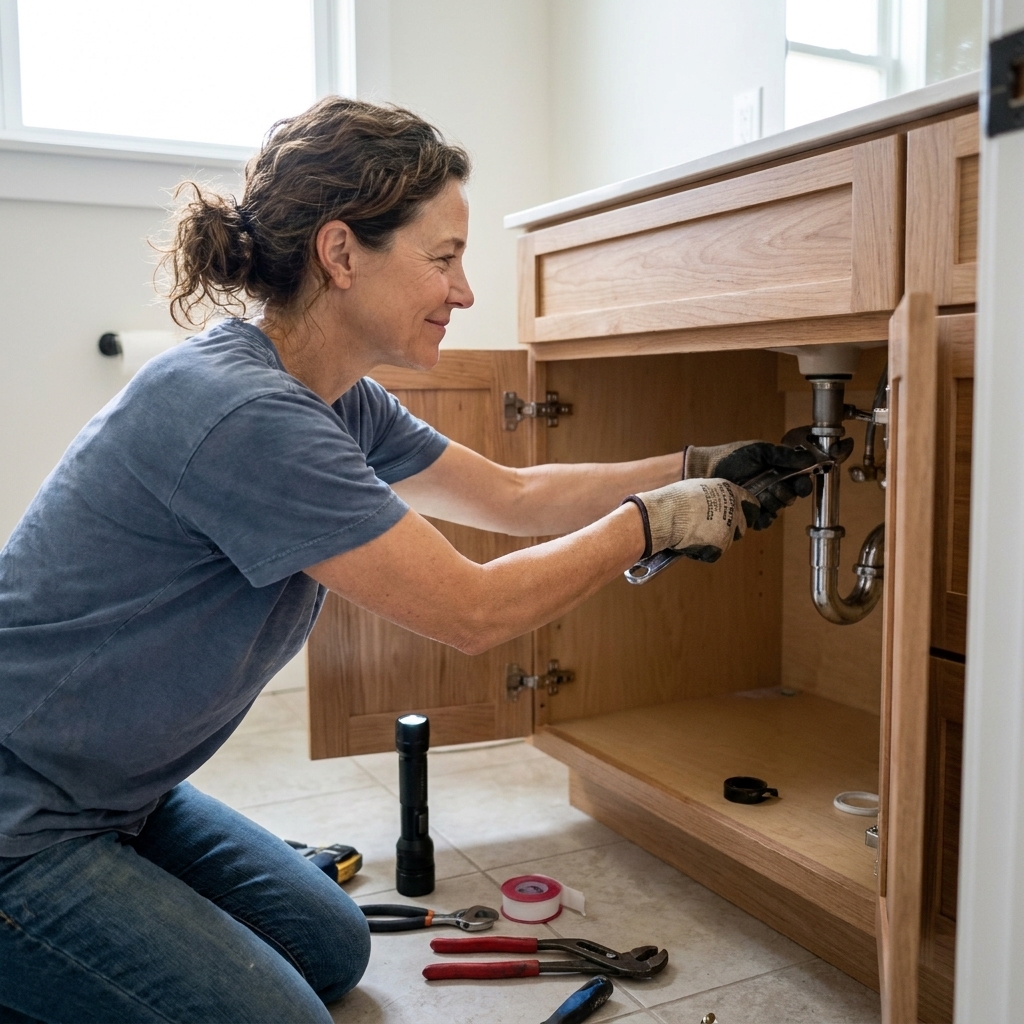
- Replacing a vanity P-trap and pop-up assembly
- Installing a toilet (especially if the flange is solid and the floor is finished correctly)
- Replacing a tub spout and trim kit without changing the valve body
DIY plumbing cost: often $200 to $1,200 for fixtures, valves, supply lines, and fittings. Add $50 to $200 for specialty tools depending on what you’re doing.
Where a plumber earns it
- Moving supply and drain lines (layout changes)
- Replacing a shower valve inside the wall
- Converting tub to shower when drain and venting need changes
- Any sign of old galvanized, polybutylene, or questionable prior work
Plumber cost: $1,200 to $6,000+ is common depending on whether walls are open, the home is on slab, and whether venting has to be corrected.
The “one leak” math
DIY plumbing fails usually don’t fail immediately. They fail on Tuesday at 2 a.m. after someone takes a long shower. A minor leak can mean:
- Drywall repair and paint in the room below
- Mold remediation if it goes unnoticed
- Rotten subfloor around the toilet or tub
That’s how a few hundred dollars saved becomes a few thousand dollars spent. If you DIY plumbing, pressure test, run fixtures hard, and re-check connections before walls close.
Tile
Tile is where homeowners most often underestimate both time and tool costs. The actual tile might be $3 to $12 per square foot and up for many ceramic and porcelain options, but the system behind it is what decides whether your shower lasts 2 years or 20.
DIY tile costs (materials + tools)
- Tile and trim: variable, but often $300 to $2,000+ depending on coverage and selection
- Backer or waterproof system: cement board or foam board or a membrane. Commonly $150 to $800
- Thinset, grout, sealant: $100 to $300
- Tooling: trowels, spacers, leveling system, buckets, mixing paddle, knee pads. $75 to $250
- Tile saw rental or purchase: $60 to $120 per day rental, or $300 to $900+ to buy
DIY tile total: $600 to $2,500+ for many bathrooms, higher for custom showers.
Pro tile costs
Pros charge for prep and waterproofing, layout, cuts, and speed. Expect:
- Bathroom floor tile install: often $800 to $2,500 labor depending on size and complexity
- Tub surround: often $1,800 to $4,500 labor
- Custom shower: often $3,500 to $9,000+ labor depending on pan method, niches, benches, and tile type
Tile redo risks
- Waterproofing gaps: corners, penetrations, niche seams, and curb transitions
- Bad substrate: tile over bouncy or deflecting floors or out-of-plumb walls causes cracking and lippage
- Layout mistakes: tiny slivers at edges and uneven grout lines scream DIY and can reduce resale appeal
Waterproofing
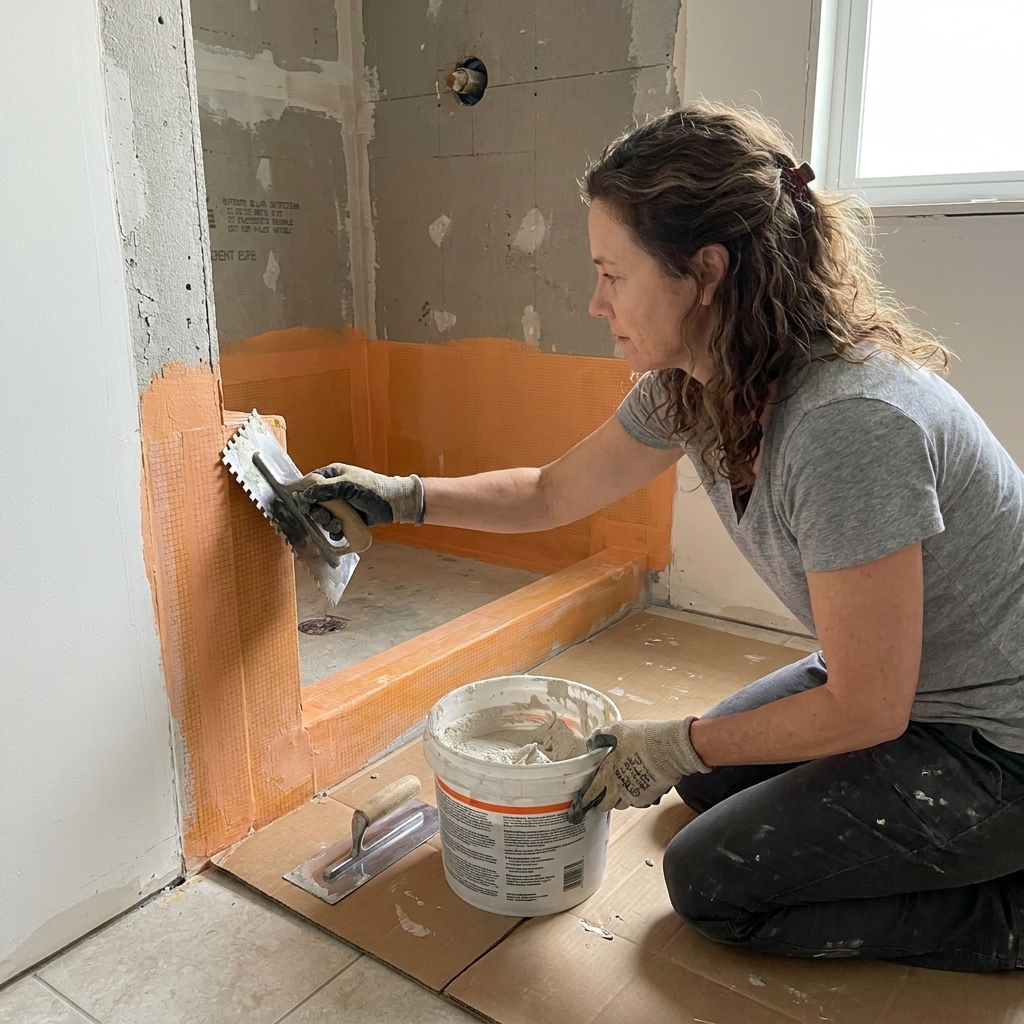
If you only take one thing seriously in a bathroom, take waterproofing seriously. Pretty tile is optional. A continuous waterproofing system is not.
The risk is simple: tile and grout are not waterproof. The waterproofing method behind them is what protects your framing and subfloor. Miss a seam, skip a preformed corner, or botch a curb transition, and you can build a slow leak that does not show itself until the damage is expensive.
If you have never built a shower pan or tied a waterproofing system into a drain assembly, this is a smart place to pay for experience, or at least pay for a pro to handle the pan and critical transitions.
Electrical
Electrical is often one of the smaller line items in a bathroom makeover, which is exactly why it’s not worth gambling with safety or inspections.
Typical scope
- GFCI outlet replacement or relocation
- Vanity light replacement
- New exhaust fan (or adding one)
- Switch upgrades, dimmers, timer switches
DIY electrical costs
Materials are usually modest: $75 to $400 depending on fan and fixtures. The bigger issue is legality and skill. Many areas allow homeowners to DIY electrical on their own residence with a permit and inspection, but requirements vary.
Electrician costs
Expect $400 to $2,500+ depending on access, whether circuits need to be added, and whether your panel has capacity. Adding a dedicated circuit for a heated floor or moving multiple switches can push higher.
Code realities that affect cost
- GFCI protection is non-negotiable for receptacles
- Proper fan venting to the exterior, not into an attic
- Wet-location ratings for fixtures where required
Always check your local code and permitting requirements. Not every jurisdiction adopts the same code year, and inspectors can enforce additional local amendments.
Ventilation
Ventilation is a quiet budget item that has loud consequences. A weak or poorly ducted fan can leave you with peeling paint, mildew, and a bathroom that always smells damp.
- Fan sizing: Bigger is not always better, but undersized is common. Many pros target at least 1 CFM per square foot as a starting point, then adjust for ceiling height and shower use.
- Ducting: Long duct runs, too many bends, or undersized duct can cripple performance.
- Controls: A timer switch or humidity-sensing control is often money well spent.
Hidden DIY costs
Even skilled DIYers get surprised by the supporting cast expenses. Add these to your spreadsheet early, not after the first weekend.
- Permits and inspections: $50 to $600+ depending on scope and municipality
- Tool purchases you won’t return: $100 to $1,000+ (tile saws, compressors, nailers, specialty plumbing tools)
- Delivery and haul-away: $50 to $300 per item in some areas
- Time off work: the most expensive line item nobody counts
- Living-in-construction costs: eating out because your only bathroom is down, hotel nights if the shower is offline longer than expected
- Damage prevention: floor protection, dust control, air filters. Cheap compared to cleaning drywall dust out of your whole house
Order of work
One reason bathroom DIY drags on is that the sequence is unforgiving. A typical order looks like this:
- Plan and buy: order long-lead items (tile, vanity, glass, specialty fixtures)
- Demo: protect floors and isolate dust
- Rough plumbing and rough electrical: with walls open
- Inspections: when required
- Close up and prep: backer, patching, leveling, waterproofing
- Tile: walls, then floors (varies by design)
- Paint and trim
- Set fixtures: toilet, vanity, lights, fan grille, mirrors, accessories
- Seal and final checks: silicone, grout cure, leak checks, GFCI test
What’s actually cheaper?
Here’s how it typically pencils out for the same general scope and mid-range finishes. These are broad ranges, but they mirror what I see over and over.
Scenario 1: Cosmetic refresh
- Mostly DIY: often $1,000 to $4,000
- Hire it out: often $3,500 to $8,000
Takeaway: DIY usually wins here if you stay in the same locations and you’re comfortable with basic plumbing swaps.
Scenario 2: Replace, same layout
- DIY-heavy approach: often $3,500 to $9,000 (with a steep time cost)
- Contractor-led: often $10,000 to $25,000+
Takeaway: DIY can save a lot, but tile and waterproofing skill is the difference between proud of myself and why is the grout cracking.
Scenario 3: Rebuild with layout changes
- DIY attempt: can start at $6,000 to $12,000, but redo risk is real
- Contractor-led: often $18,000 to $40,000+
Takeaway: This is where hiring pros often ends up cheaper in total cost of ownership, even if the invoice is higher.
The hybrid approach
If you want the best cost-to-sanity ratio, hybrid is the sweet spot. Here’s a combo I recommend constantly:
DIY these
- Demo and cleanup (with dust control)
- Painting
- Installing accessories: towel bars, hooks, shelving
- Vanity, mirror, and light swap if wiring is straightforward and legal in your area
- Trim work and finish carpentry if you’re comfortable
Hire these out
- Shower valve replacements and any drain or vent work
- Shower waterproofing and pan building if you have not done it before
- New circuits, panel work, or relocating multiple electrical boxes
Depends tasks
- Floor tile in a simple room
- Pre-fab shower base installs
- Toilet installs if the flange and subfloor are solid
Compare bids to DIY
If you’re deciding between DIY and hiring a contractor, compare apples to apples by pricing your DIY plan like a pro would.
- List every line item: demo, dump, waterproofing, backer, fasteners, caulk, paint, trim, hardware, delivery fees.
- Add tool costs: include rentals and the stuff you’ll buy at 8 p.m. when you realize you need it.
- Assign a value to your time: even a modest hourly number changes the math quickly.
- Include contingency: bathrooms deserve 15 to 25 percent for surprises.
- Price the oops factor: if you crack a tile box, miscut a niche, or damage a tub, replacement costs matter.
FAQ
Is it cheaper to DIY a bathroom remodel?
Often, yes, especially for cosmetic refreshes. DIY saves labor, but bathrooms have higher redo risk than most rooms. The more waterproofing, plumbing, and electrical you touch, the more likely a pro ends up cheaper in the long run.
What part of a bathroom remodel is most expensive to hire out?
Custom tile showers and plumbing changes usually lead the pack. They are labor-heavy and require skill, and both can create expensive damage if done wrong.
Can I do my own plumbing and electrical in a bathroom?
Sometimes, depending on local rules and whether you pull permits. Even when it’s legal, hiring out anything inside walls that affects waterproofing, venting, or circuit capacity is usually the safer call.
What’s the best DIY task for saving money?
Demolition and prep, as long as you do it safely, protect the rest of the house from dust, and don’t remove anything structural.
Bottom line
DIY is a fantastic tool, not a badge of honor. Use it where it buys you real savings with manageable risk: demo, paint, basic swaps, and the finishing touches that make a bathroom feel polished.
Spend on pros where mistakes become water damage, failed inspections, or safety hazards: plumbing in walls, shower waterproofing if you’re new to it, and electrical changes beyond simple replacements.