A contractor-minded guide to shower niche height: common placement, shortest-user rule, stud spacing realities, waterproofing basics, and how to adjust for s...
When I was a kid, my dad would have me hold the flashlight while he set shower plumbing in a half-framed bathroom. He always said the same thing: pick your finished heights first, then build the wall to match. That advice still saves my clients from “why does the shower hit me in the chest?” regret.
So let’s get specific. If you want one good, widely used number you can put on your studs today, this is it: about 80 inches above the finished floor for a typical fixed shower head. From there, we’ll fine-tune for tall households, slide bars, rain heads, tub-shower combos, and tricky layouts like a built-in bench.
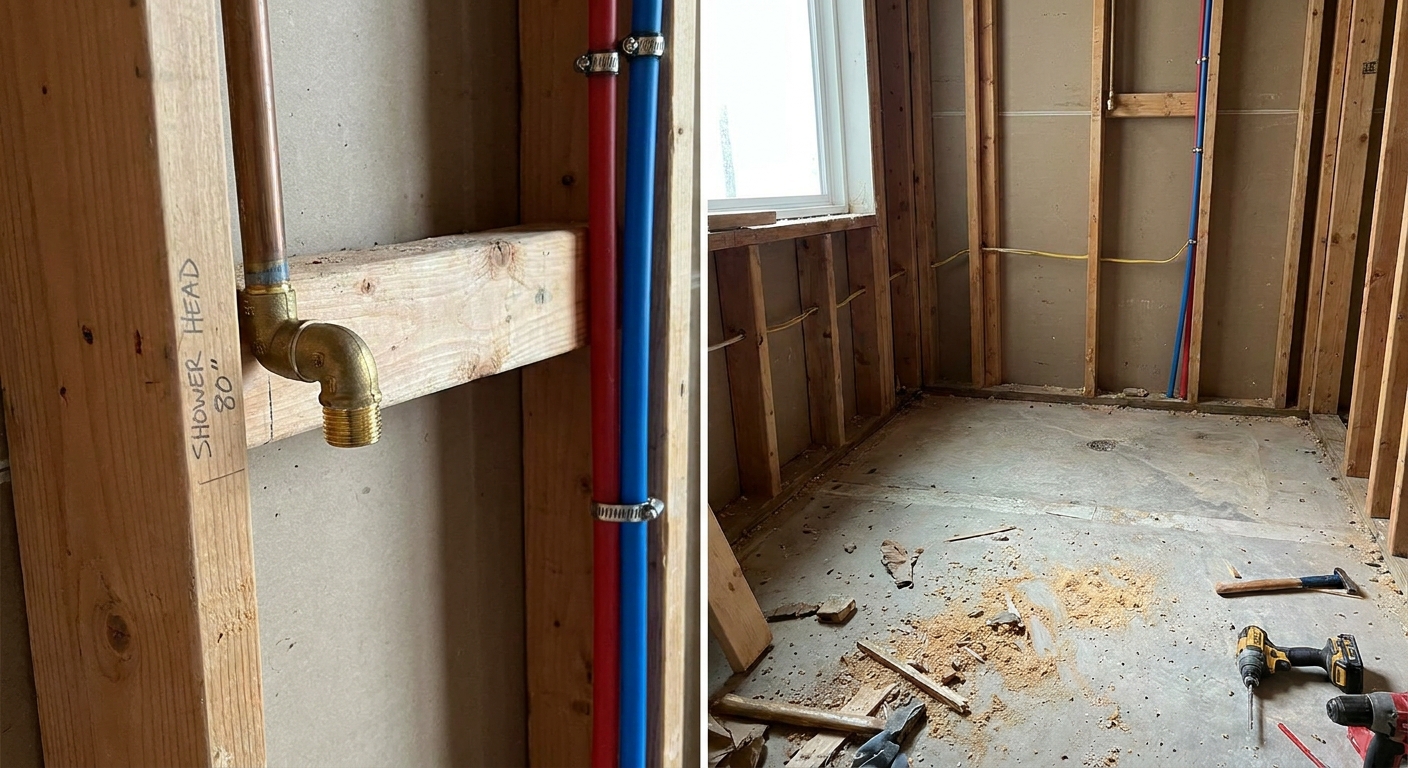
The common height: 80 inches AFF
Common fixed shower head height: about 80 inches above finished floor (AFF).
That tends to land a fixed shower head comfortably above the average adult’s head while still keeping the spray pattern in the “hits your shoulders and chest” zone instead of blasting straight over you. It is not a universal standard, though. Regional practice, ceiling height, and the people using the shower should drive the final call.
Two clarifiers that matter on real job sites:
- AFF means above finished floor, not above the subfloor and not above the tub rim. Tile, thinset, shower pan thickness, and curb height all change the final number.
- You are not measuring to the valve. This number is for the shower arm outlet where the shower head connects.
Tub-shower combos: measure the standing surface
This is where people get tripped up.
- If you are showering standing in a tub, measure from the tub floor (the surface your feet stand on), not from the tub rim.
- If it is a walk-in shower, measure from the finished shower floor tile.
In a tub-shower combo, the spout and diverter layout can also limit options for a slide bar or a second head. Plan the whole “system” together before you lock anything into studs.
What you are setting in the wall
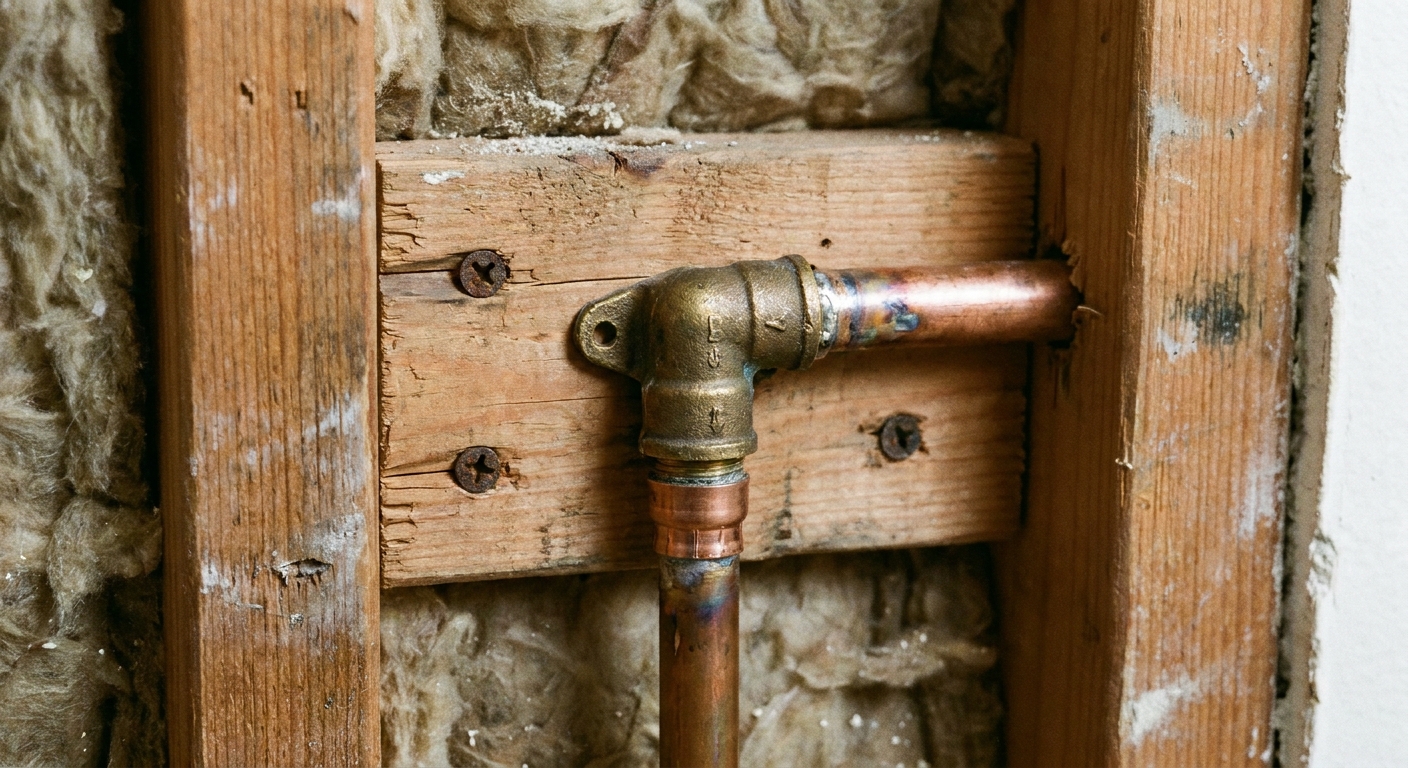
When you “set shower head height,” you are really setting the drop-ear elbow, the threaded fitting that the shower arm screws into.
Where the drop-ear elbow sits
The drop-ear elbow typically sits:
- In the stud bay, between studs
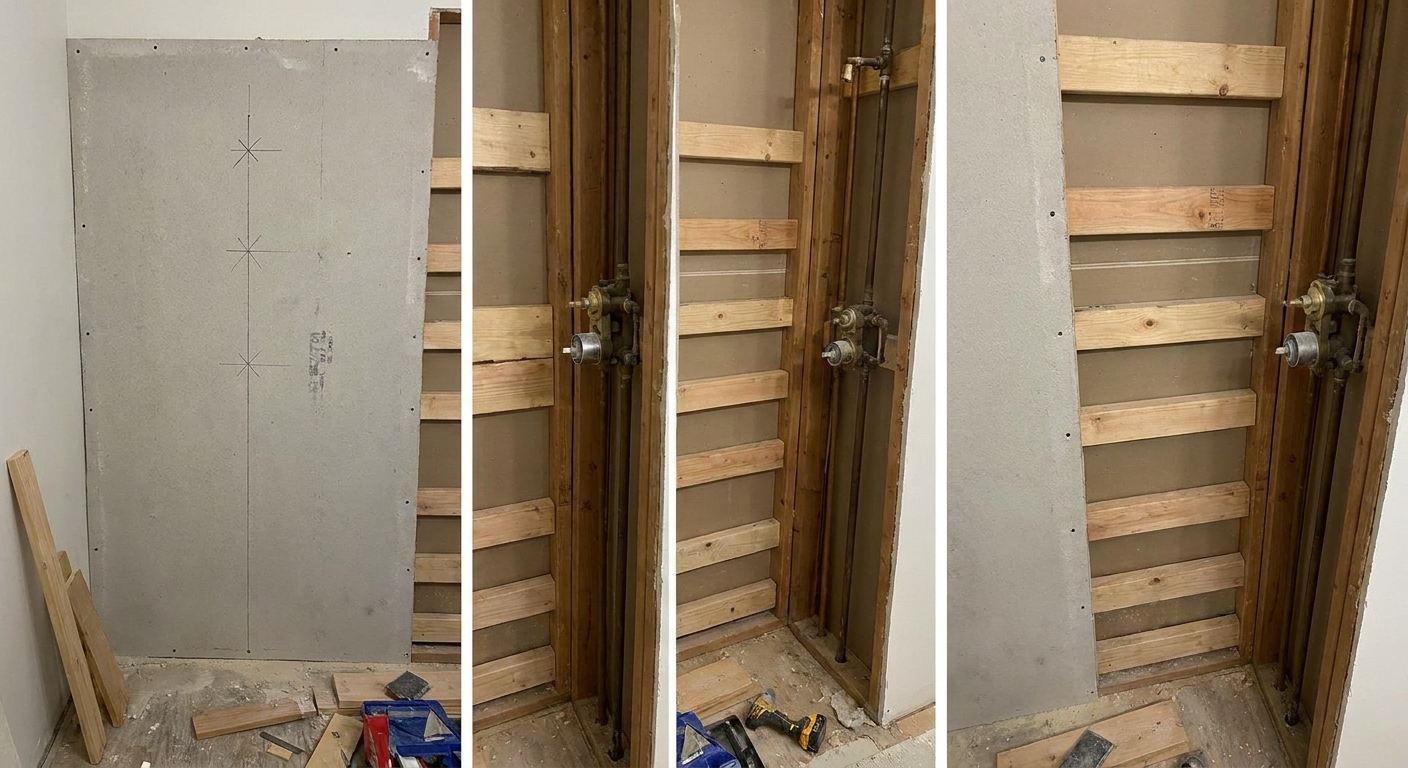
- Secured to solid blocking (usually a 2x4 or 2x6 installed horizontally)
- At the right finished depth so the shower arm threads and escutcheon sit correctly once backer board and tile are installed
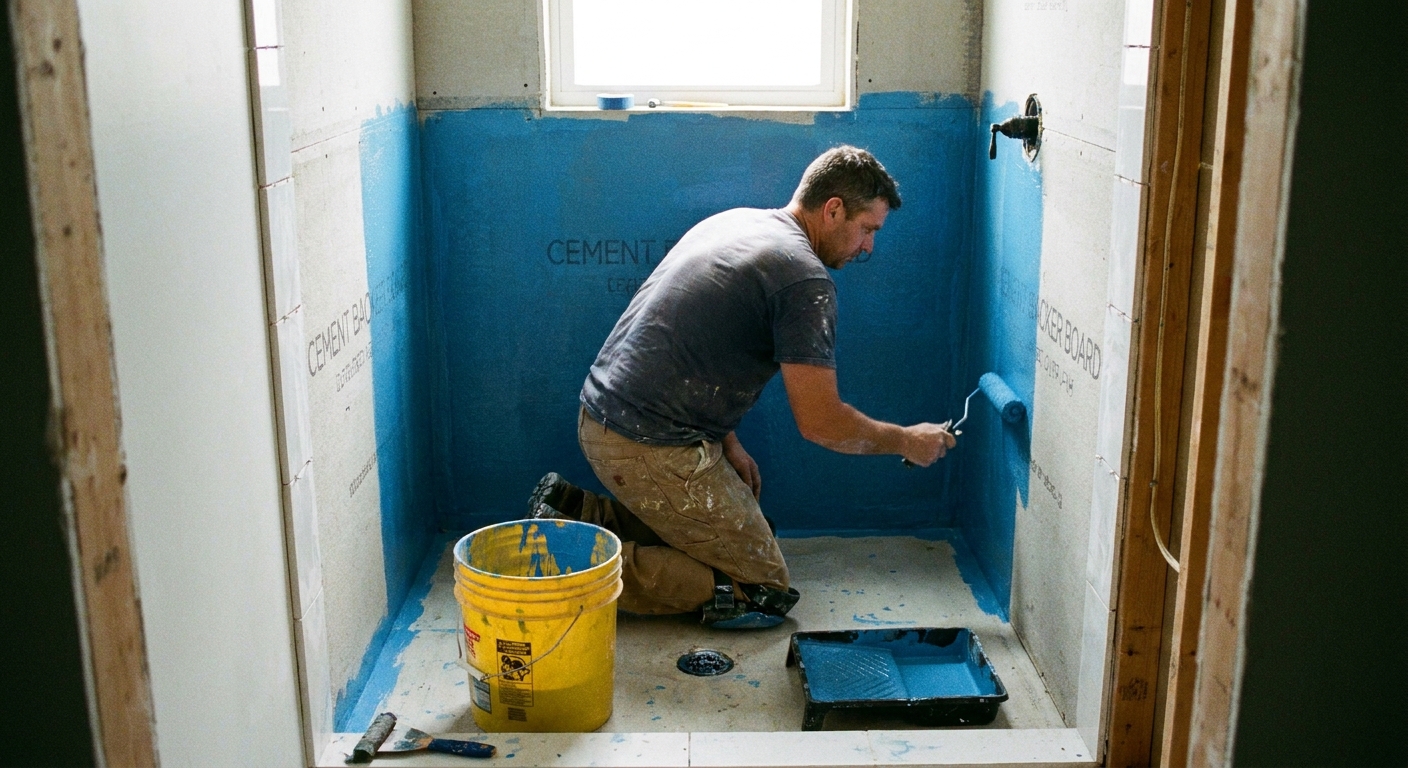
My practical rule: before you fasten the blocking, decide your wall build-up and plan for it. A common shower wall build-up is:
- 1/2 inch cement board or foam backer
- Waterproofing membrane or liquid waterproofing
- Thinset
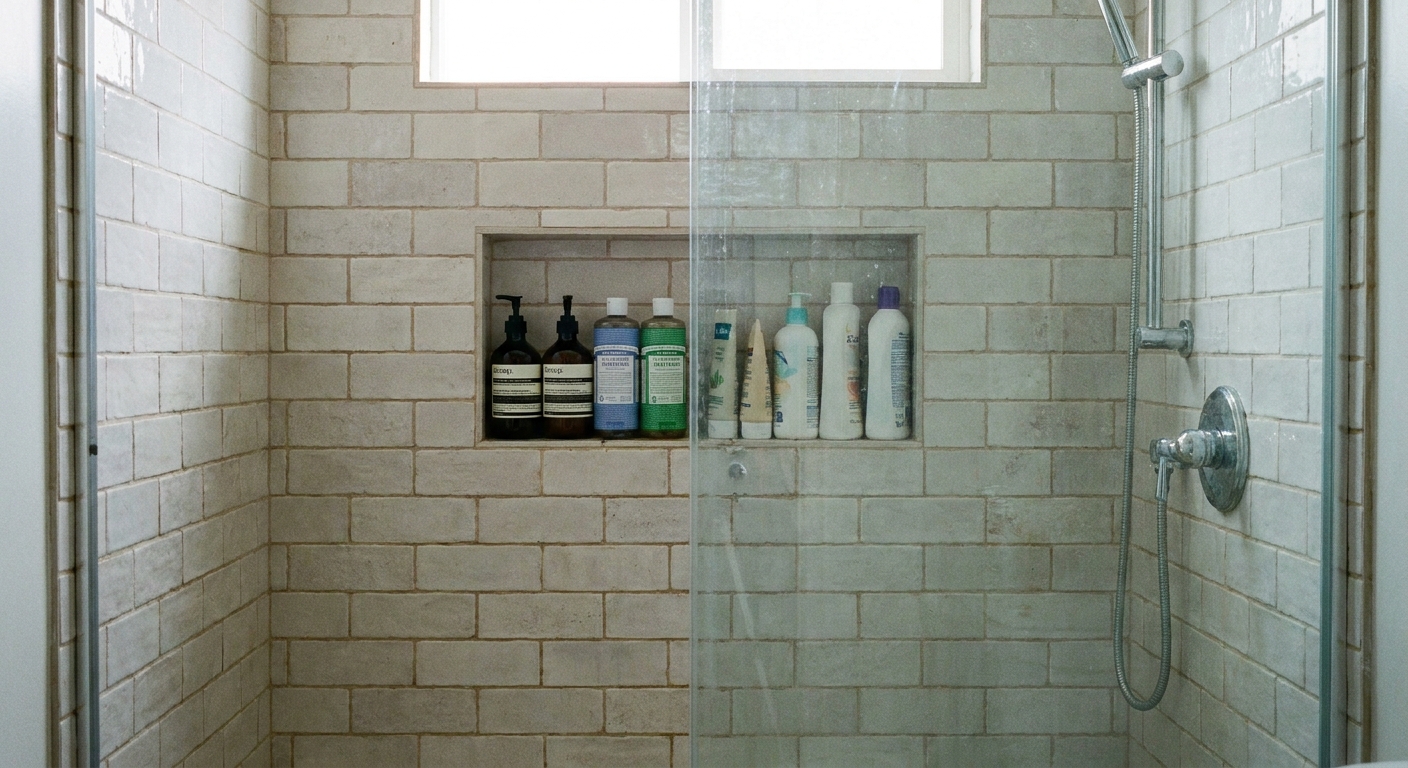
- Tile (often 3/8 inch, but it varies)
Also, follow the manufacturer’s rough-in depth requirements for your trim and shower arm. Some setups want the elbow a touch deeper or a touch prouder than you would guess, and that little difference can decide whether your escutcheon sits tight or looks like an afterthought.
If the elbow ends up too deep behind the finished tile, you can fight with trim and shower arms later. If it ends up too proud, the trim may not sit right and you can crack tile tightening the arm.
Valve height is a separate decision
Since people ask: valve height is about comfort and reach, not the shower head. A very common range is about 38 to 48 inches AFF to the valve centerline, but it varies with user height, tub-shower vs shower-only, and whether you want it reachable from a bench.
If you are aiming for a more universal design, err toward a comfortable reach for shorter users and consider placing controls where you can turn water on without getting soaked immediately. And of course, use a code-approved scald-protection valve where required.
Adjusting for a tall household
If anyone in your home is tall, the 80-inch starting point can feel low, especially with a head that angles downward.
A simple approach that works well:
- 80 inches AFF: average household, safe default
- 82 to 84 inches AFF: tall household (think 6 feet and up), without feeling comically high
- 85 to 86 inches AFF: very tall users or if you like the shower head more overhead than forward
One caution from the design side: if you push the head too high, you can sometimes lose the “wraparound” feeling. In some bathrooms, the spray travels a bit farther through cooler air, and depending on flow rate, room temperature, and how hot you run the water, it can feel less warm by the time it hits you. Not always, but it is worth thinking about.
Slide-bar hand showers
If you are using a slide-bar hand shower, you have a lot more flexibility, but you still need smart rough-in planning.
Two common setups
- Hand shower on a slide bar fed from a wall supply elbow (hose connects at the wall). This is the cleanest for remodeling because the hose connection stays put and the bracket moves.
- Hand shower on a slide bar with the hose connected at the tub spout/diverter (more common in tub-shower combos).
Good mounting ranges
For a slide bar in a shower, these targets are homeowner-friendly:
- Bar bottom: 36 to 42 inches AFF (comfortable reach, keeps hose managed)
- Bar top: 72 to 78 inches AFF (lets the hand shower sit high enough to act like a normal shower head)
If you want the hand shower to fully replace a fixed head for a tall person, I like a slide bar that can place the handset around 78 to 82 inches AFF.
Also plan for blocking. A slide bar needs solid anchoring, and trying to rely on tile anchors alone is how you end up with a wobbly bar after six months.
Rain shower heads
Rain heads can look spa-level, but they are the most likely to go wrong if you do not think through ceiling height and where the arm will land.
Typical rain head heights
- Ceiling-mounted rain head: usually centered under the ceiling plane (final height depends on your ceiling and the head thickness)
- Wall-mounted rain head: often 84 to 90 inches AFF, depending on the arm length and the angle you want
What matters most is the distance from the shower floor to the face of the rain head. Many installers aim to keep the bottom of the head roughly 6 to 12 inches above the tallest user’s head, but treat that as a rule of thumb. Head diameter, flow, and ceiling height all change what feels right.
Low ceilings and slopes
If your shower has a dropped ceiling, a soffit, a sloped ceiling, or just a true 7-foot ceiling, check head clearance early. You may need to:
- Use a shorter-profile rain head
- Use a wall-mounted rain head with a curved or angled arm
- Skip the rain head and do a high-quality standard head plus a hand shower
Benches change the spray path
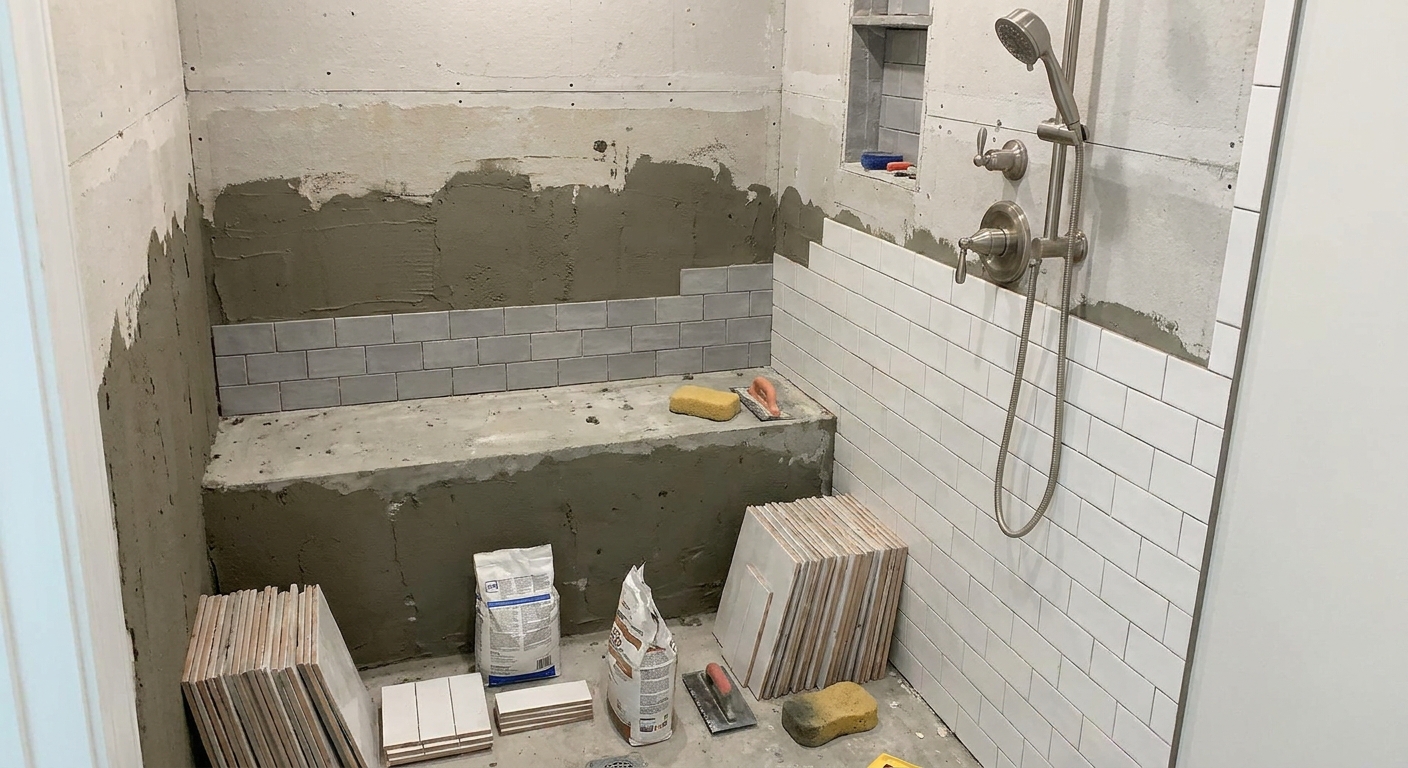
A built-in bench is wonderful, but it changes where your body stands and where water lands. If the bench is on the same wall as the shower head, the shower head can end up effectively closer to you and the spray can feel harsher or awkward.
How to think about it
- If you will stand in front of a bench a lot, you might want the head slightly higher or angled differently so it hits your shoulders instead of your face.
- If you will sit on the bench regularly, a hand shower becomes your best friend. A fixed head alone often misses the mark for seated rinsing.
Practical guidance I give clients:
- Keep the fixed head at 80 to 84 inches AFF depending on user height
- Add a hand shower, and place the slide bar where it is reachable from the bench, usually with the lower portion of the bar around 36 to 42 inches AFF
Mark these heights on framing
If you are standing in a gutted shower with a tape measure and a pencil, here are reliable marks to put on the studs. These are measured above the finished standing surface (finished shower floor, or tub floor in a tub-shower combo).
- Fixed shower head drop-ear elbow: about 80 inches (common starting point)
- Tall household fixed head: 82 to 84 inches
- Very tall users: 85 to 86 inches (only if it still feels right in your space)
- Slide bar hand shower: bottom 36 to 42 inches
- Slide bar hand shower: top 72 to 78 inches (or higher if your bar allows and your users are tall)
- Wall-mounted rain head outlet: 84 to 90 inches (verify arm length, head size, and ceiling clearance)
My best on-site trick: before plumbing gets locked in, hold a piece of painter’s tape at the proposed height and physically stand where you will stand in the shower. If there is a bench, stand where your feet will actually go, not where you wish they would go.
Quick FAQs
Is 80 inches measured to the shower arm or the shower head?
It is typically measured to the shower arm outlet, meaning the drop-ear elbow centerline in the wall. The head itself will sit a bit higher or lower depending on the shape of the arm and head.
What if I have a curbless shower or a thick shower pan?
That is exactly why measuring from the finished standing surface matters. If your finished floor height changes, adjust your rough-in marks so the final measurement from the finished tile floor still lands at your target.
Do I need to follow code or manufacturer instructions?
Yes. Use this as field-tested guidance, then confirm local plumbing code and the manufacturer’s rough-in instructions for valves, trims, and any rain head or ceiling-mounted components. It is much cheaper to adjust on open studs than after tile.
Can I just put it somewhere around there?
You can, but you will feel the difference every day. Shower head height is one of those small choices that quietly affects comfort for years, and it is easiest to get right while the wall is open.