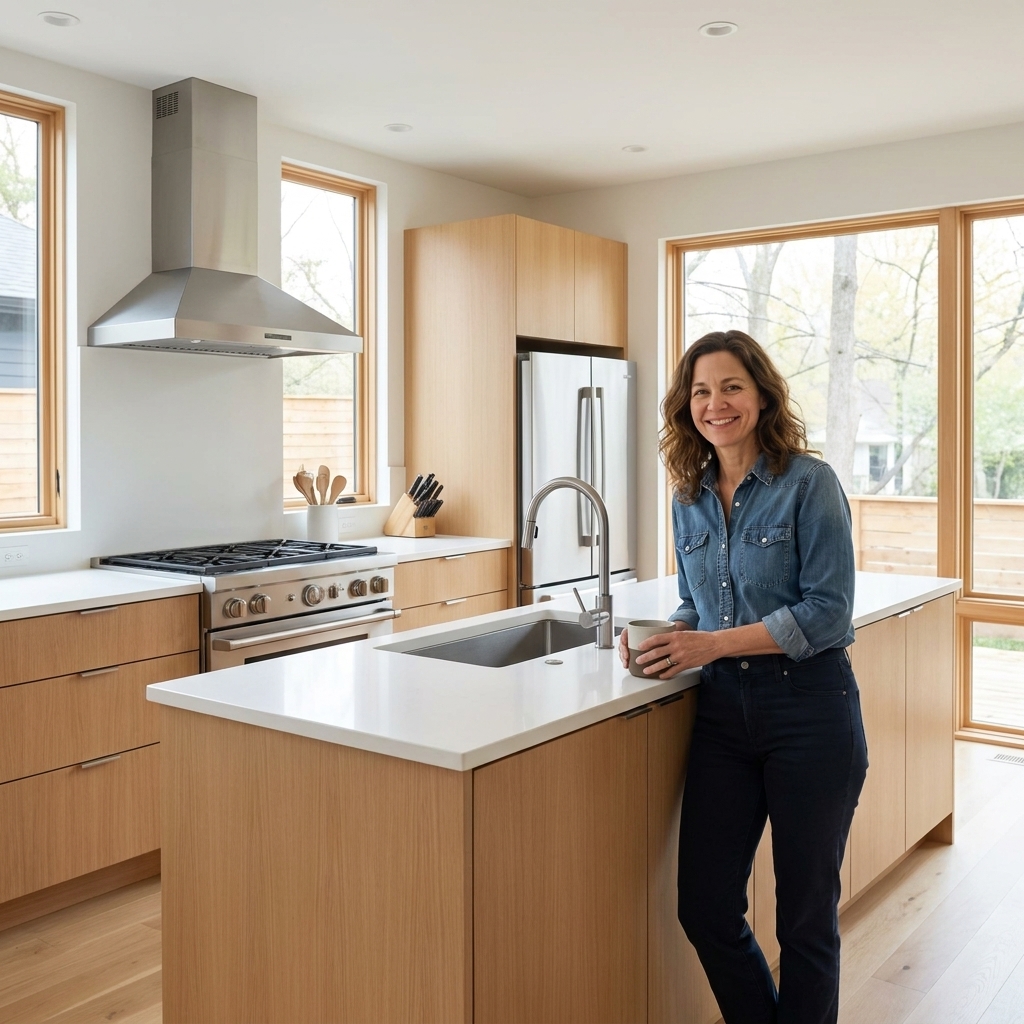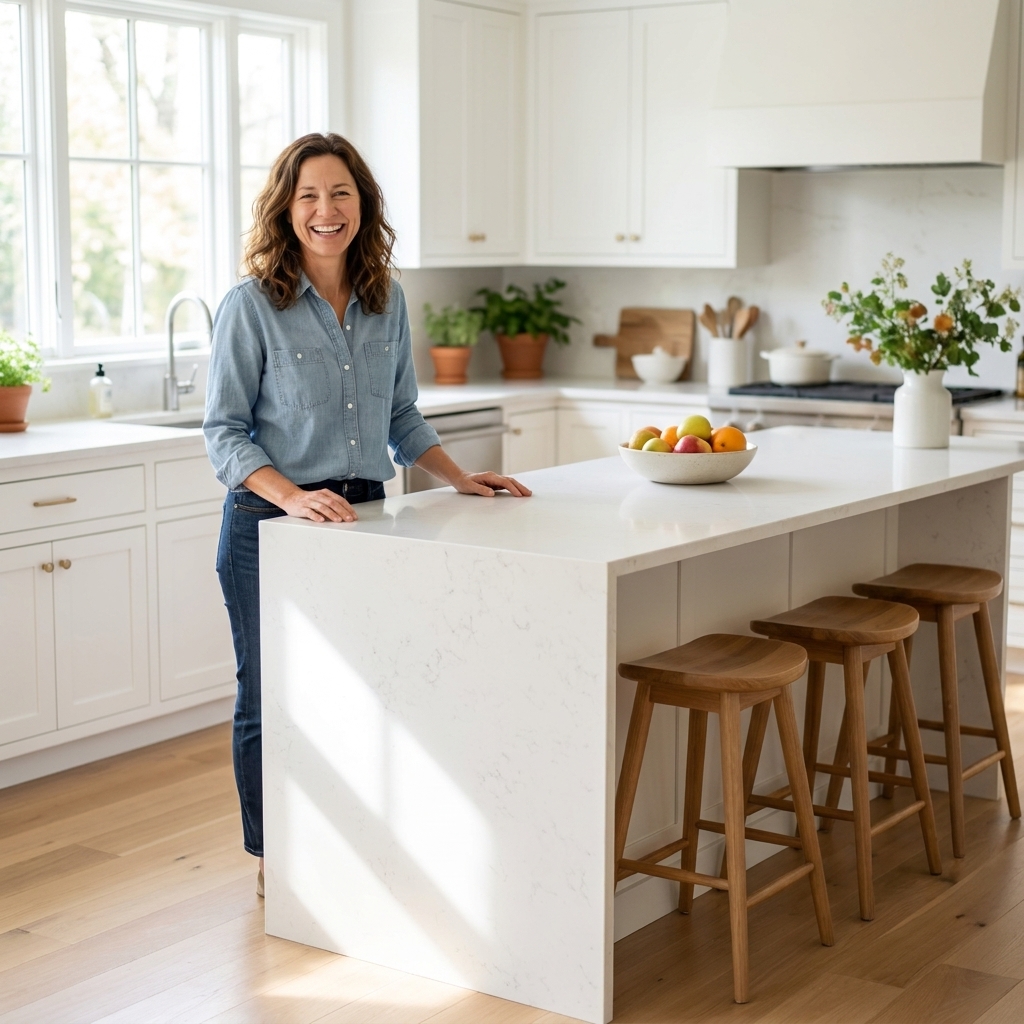

A step-by-step plan for combining ambient, task, and accent lighting so your kitchen feels warm, looks intentional, and lights your real prep zones.
If you have ever stood in a cabinet showroom holding a door sample like it is a life decision, you are my people. Kitchen remodel budgets can disappear fast, and not always in places you will feel day to day. The goal is not “cheap” or “luxury.” The goal is durable, functional, and right for your home, with a few strategic splurges that make the kitchen feel like a win every single morning.
I spent 12 years in a design-build world where I saw the best investments, the sneaky money pits, and the heartbreak of gorgeous choices that did not hold up. Let’s sort your kitchen into: what to splurge on, what to save on, and what to do if you are trying to protect resale value without remodeling for an imaginary buyer.
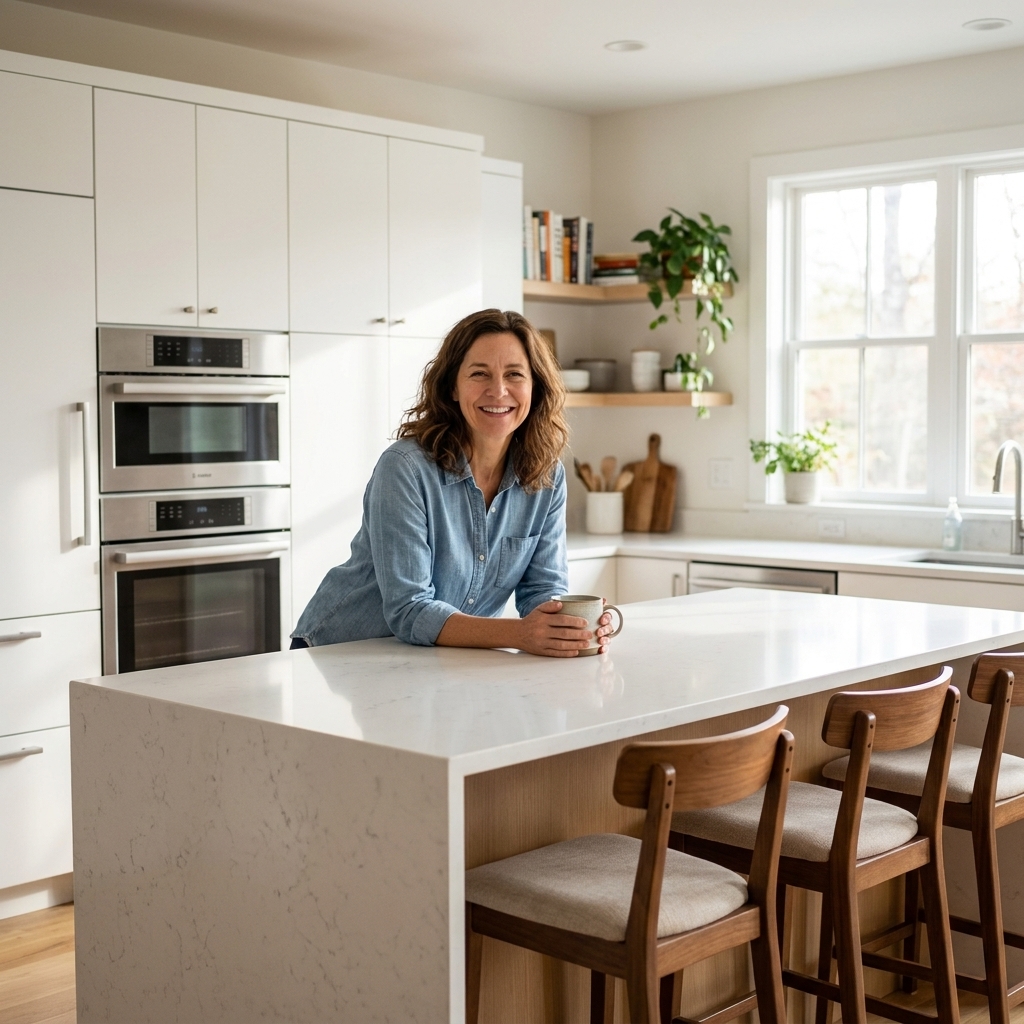
Start here: decide what matters
Before you pick finishes, answer these four questions. They will make your save vs. splurge calls way easier.
- How long are you staying? Under 5 years leans resale-smart. Over 5 years leans lifestyle-smart.
- How hard do you cook? Daily cooking needs better ventilation, better layout, and tougher surfaces.
- What is already fixed in place? If you cannot move plumbing or a load-bearing wall, put your money into function and finishes you will touch.
- What is the weakest link? In most older kitchens it is storage, lighting, and outlets, not the countertop.
Elena rule: Splurge on the things that are expensive to change later or that protect the bones of the room. Save on the things that are easy to swap when trends shift.
Splurge: upgrades that pay you back
1) Layout and flow
If your kitchen functions poorly, no amount of marble will save it. Good flow reduces frustration, improves safety, and makes the kitchen feel bigger without adding square footage.
- Widen tight pinch points, especially around islands and the fridge.
- Relocate the sink or range if it solves a real workflow problem.
- Add a true landing zone next to the range and microwave.
Where the money goes: design time, framing, plumbing and electrical adjustments, drywall, flooring patches, and sometimes permits. Not glamorous, but it is the foundation of satisfaction.
2) Cabinets and storage planning
Cabinets are one of the biggest line items, and they are also the hardest to “upgrade later” without basically remodeling again. If your budget allows one major splurge, I usually point here.
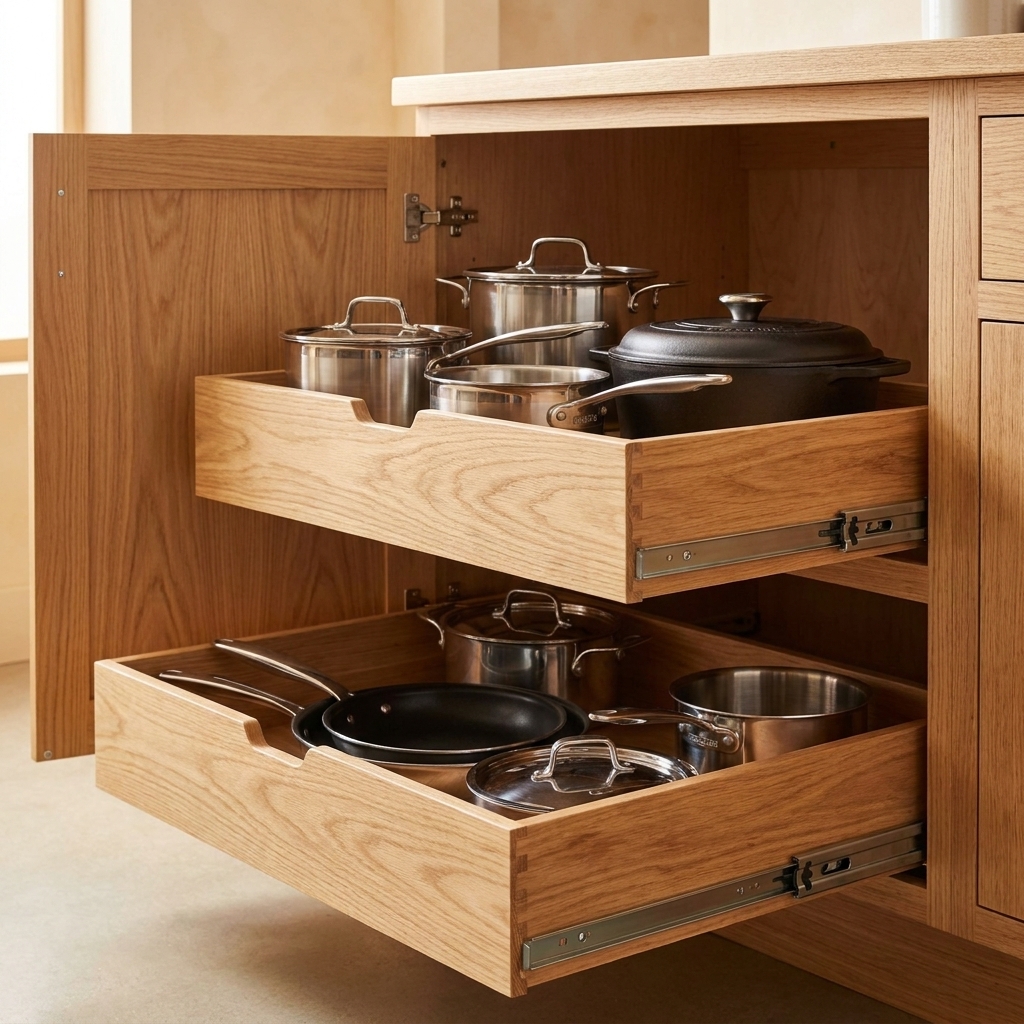
- Prioritize better boxes and hardware: Plywood boxes (or high-quality furniture board) with solid joinery and soft-close hinges last longer than pretty doors on flimsy boxes.
- Pay for smart storage where it counts: trash pull-out, a wide drawer bank for pots and pans, tray dividers, and roll-outs in base cabinets.
- Go simpler on door style if needed: A clean Shaker door often looks higher-end than a busy profile in a bargain line.
Designer tip: Spend on interior functionality, not just the outside. You will feel roll-out trays every day. You stop noticing door style after a week.
Splurge: performance details people skip
3) Ventilation
A good range hood is not a luxury item. It is an insurance policy for your cabinets, paint, and indoor air quality.
- Splurge when: you sear, fry, use a wok, or cook daily.
- Look for: correctly sized hood (capture area matters), quieter sones, and proper ducting to the exterior.
- Avoid: recirculating-only hoods if you can reasonably duct outside.
Why it adds value: It is a performance feature buyers notice during showings, and it helps keep your kitchen from smelling like last night’s salmon forever.
4) Lighting plan
Lighting is where I see homeowners get underwhelmed after spending a lot elsewhere. Great lighting makes budget finishes look more expensive and makes cooking safer.
- Splurge on layers: recessed or surface ambient lighting, under-cabinet task lighting, and a decorative fixture or two for personality.
- Do not skip: under-cabinet lighting. It is one of the highest happiness-per-dollar upgrades.
- Choose wisely: warm-neutral color temperature (often 2700K to 3000K) and high color rendering if possible.
5) Countertops
Countertops matter because you touch them constantly. But “splurge” does not automatically mean the most expensive stone.
- Best all-around value: quality quartz for durability, consistent patterns, and low maintenance.
- Worth it for the right cook: durable granite, or certain natural quartzites if you understand sealing and variability.
- Proceed carefully: marble, especially in busy family kitchens, because it etches and stains easily.
Where to put your countertop money: a thicker-looking edge detail, fewer seams, and a great fabricator. Installation quality is everything.
Save: cut costs without it feeling cheap
1) Cabinet door style and finishes
You can often save by choosing a simpler door style, a standard paint color, or a durable laminate finish. Put your cabinet dollars into construction quality and smart storage, then keep the exterior clean and classic.
- Choose standard sizes over lots of custom oddities.
- Use fewer glass doors. They cost more and demand constant styling.
- Skip decorative legs, corbels, and fussy trim unless it truly suits your home.
2) Hardware
Hardware can get surprisingly pricey, fast. The good news is that it is easy to upgrade later.
- Save now: pick a reputable midrange brand in a standard finish.
- Splurge later: swap pulls and knobs when you want a refresh.
Pro move: Keep the hole spacing standard so you are not locked in.
3) Backsplash
This is my favorite place to save because there are so many affordable materials that look fantastic when installed well.
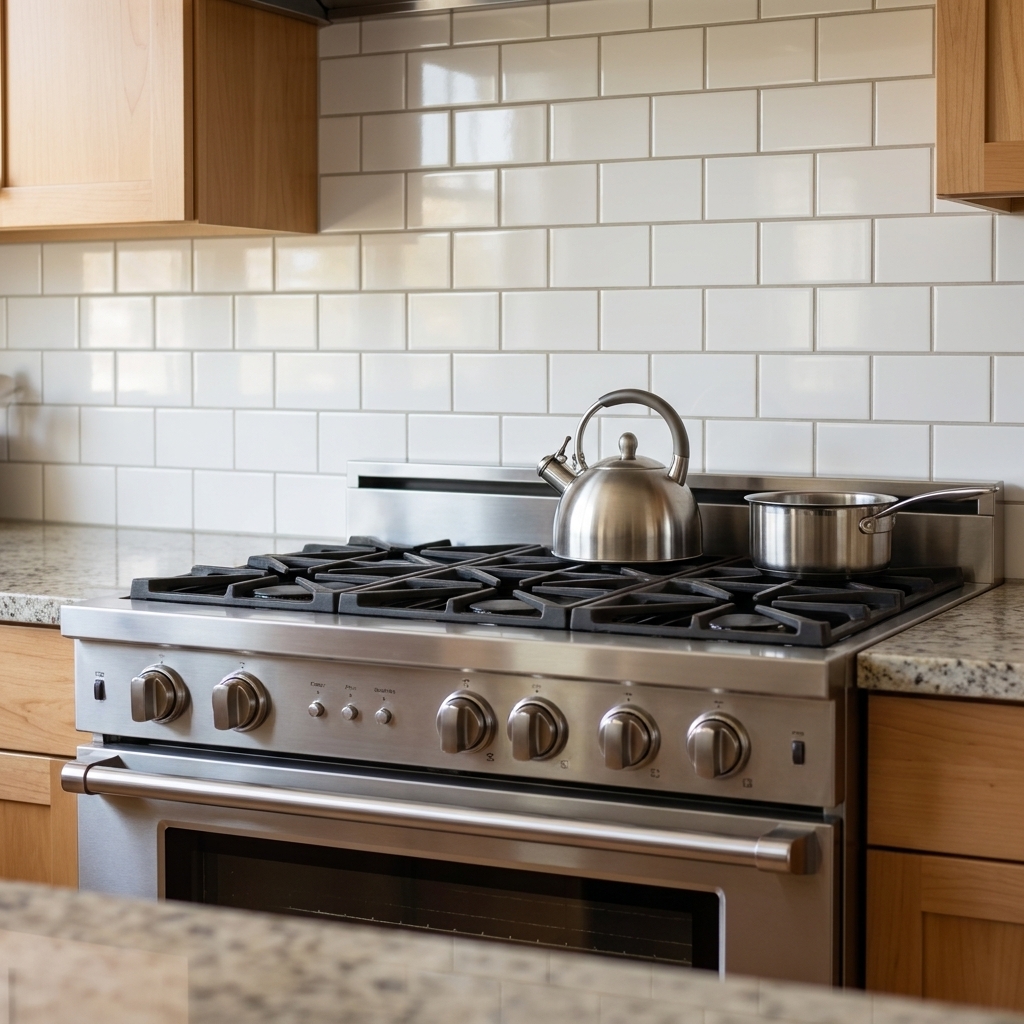
- Classic subway tile is timeless and budget-friendly.
- Use a simple tile and spend on a beautiful layout or grout choice.
- If you love a pricey handmade tile, use it as a focal behind the range and go simple elsewhere.
Save: good-enough picks that perform
4) Sink and faucet
Most homeowners can save here by choosing a well-reviewed, midrange faucet and a practical sink material.
- Save: stainless steel undermount sinks in a good gauge, or durable composite sinks.
- Splurge only if it matters to you: a workstation sink setup, touchless faucet, or a specialty finish.
The exception: do not buy the absolute cheapest faucet. I have seen too many leak, loosen, or fail early. Repairs behind a sink are not fun.
5) Mid-tier appliances, strategically
Unless you are a serious home chef, you do not need pro-style everything. Many mid-tier appliance packages perform beautifully and free up budget for cabinets and lighting.
- Where to spend: range performance if you cook a lot, and a quiet dishwasher if you have an open layout.
- Where to save: built-in microwave, basic hood if it is properly sized and ducted, and sometimes the fridge if it fits well and is reliable.
Common regrets and smarter swaps
Overbuilding for the neighborhood
A $150,000 kitchen in a $350,000 neighborhood is tough to recoup. Keep finishes cohesive with your home’s price point and style.
Paying for trends that date fast
Trendy tile shapes, very bold countertop patterns, or ultra-specific cabinet colors can feel stale quickly.
- Instead: keep expensive, hard-to-change items classic (cabinets, counters, layout).
- Add trend in the easy stuff: paint, lighting fixtures, stools, and decor.
Skipping the unsexy upgrades
Not upgrading old wiring, not adding enough outlets, and ignoring water shutoffs are the kinds of “savings” that come back to bite you.
- Add outlets where you actually use appliances.
- Confirm GFCI protection where required near sinks.
- Replace old shutoff valves during plumbing work.
A budget split that works
Every kitchen is different, but this is a practical starting point for many remodels.
- Cabinets and storage: 25% to 35%
- Labor (demo, carpentry, electrical, plumbing, drywall, paint): 20% to 35%
- Countertops: 8% to 15%
- Appliances: 10% to 20%
- Flooring: 5% to 10%
- Lighting: 3% to 8%
- Backsplash: 2% to 6%
- Sink and faucet: 2% to 5%
- Contingency: 10% to 15%
Please do not skip contingency. Once walls open up, surprises happen. Older homes, especially, love to reveal creative wiring and mystery plumbing.
Save vs. splurge by kitchen type
Starter home or condo kitchen
- Splurge: layout improvements that increase usable storage, lighting, and a quiet dishwasher.
- Save: standard cabinet sizes, basic quartz, classic tile, and midrange appliances.
Family kitchen that takes a beating
- Splurge: durable cabinet boxes and hardware, quartz or tough stone, great ventilation, and a workhorse sink.
- Save: decorative finishes, open shelving that collects clutter, and boutique hardware.
Forever home kitchen
- Splurge: storage planning, high-performing hood, lighting design, and the appliances you truly want to cook on.
- Save: anything you can swap later (pendants, hardware, wall paint).
Quick checklist: splurge first
- Functional layout fixes that reduce daily frustration
- Cabinet construction and smart storage
- Ventilation ducted outside
- Lighting layers, especially under-cabinet lighting
- Countertop fabrication and installation, not just the slab choice
FAQ
Is it worth refacing cabinets to save money?
Sometimes. Refacing can make sense if your cabinet boxes are solid, the layout works, and you just want a cosmetic update. If you hate the storage or the boxes are worn, refacing can be a frustrating “almost” solution that still costs real money.
What is the best place to save without hurting resale?
Backsplash, hardware, and decorative lighting are usually safe savings. Keep the core choices timeless and well-installed, and buyers rarely care that your pulls were not the most expensive line in the showroom.
Should I splurge on a kitchen island?
Splurge on function, not size for the sake of size. A well-planned island with seating clearance, outlets, trash pull-out, and drawers is worth it. An oversized island that blocks the fridge or the range will feel like a mistake every day.
What adds more value: quartz counters or new cabinets?
In most kitchens, cabinets and layout create more value because they drive storage and function. Quartz is a great choice, but it cannot fix a kitchen that does not work.
My bottom line
Splurge on the things that are hard to change later: layout, cabinet quality and storage, ventilation, and a lighting plan that makes the room feel good. Save on the cosmetic pieces you can swap in a weekend. A smart kitchen budget is not about bragging rights. It is about building a room that works hard, looks great, and stays that way.
If you want the most tailored advice, take five minutes and write down how you cook, what annoys you in your current kitchen, and what you refuse to compromise on. That list is your remodel compass.