
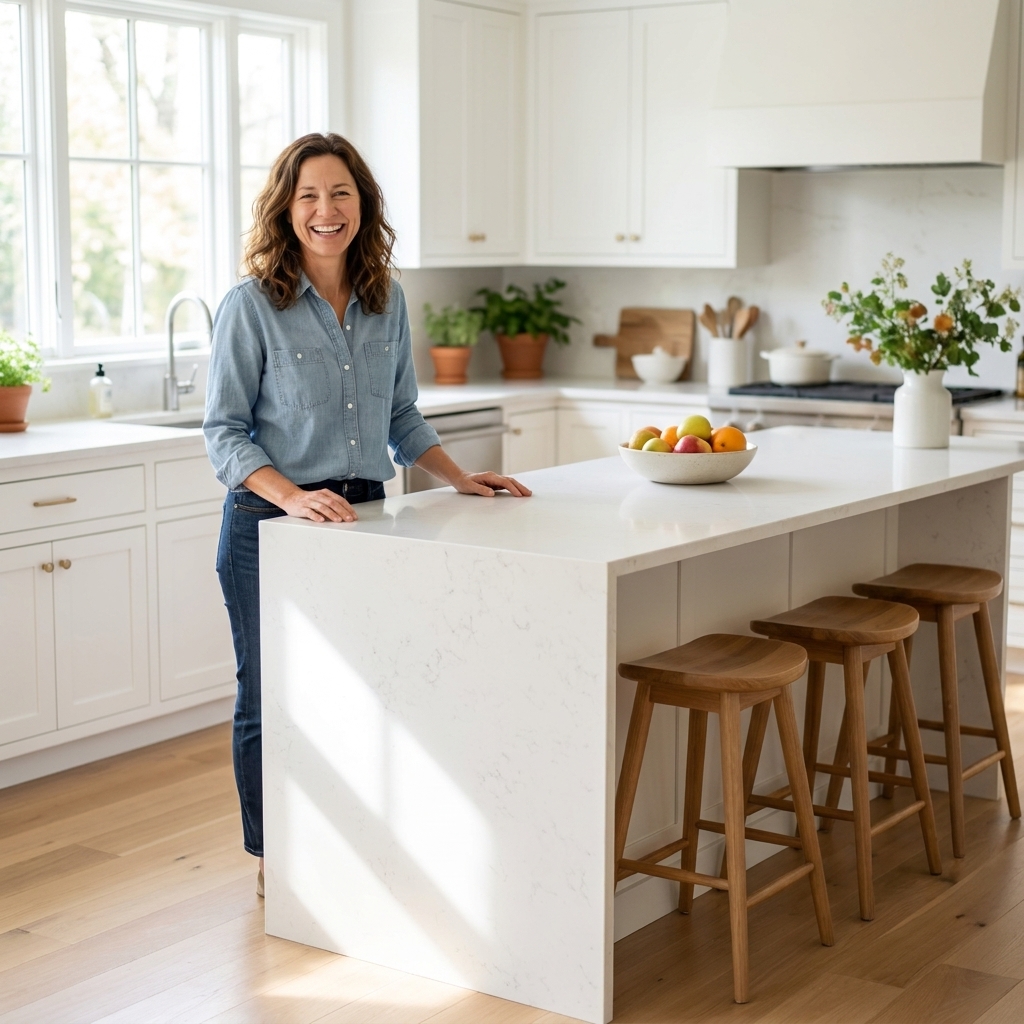
The essential measurements for a functional kitchen island: aisle widths, seating space, countertop overhangs, and appliance and sink clearances, explained i...
Countertops look like a style decision. In real life, they are a lifestyle decision. I have watched a gorgeous surface get “ruined” by a single hair dye session in a bathroom, and I have also seen a budget-friendly top look brand new ten years later because it matched how the homeowners actually cook and clean.
This guide breaks down quartz vs. granite vs. marble in plain English: what they cost, how they wear, what maintenance is truly required, and which one makes sense for kitchens and bathrooms.

At-a-glance: the big differences
If you read nothing else, start here.
- Quartz: Best all-around for busy homes. Low maintenance, very stain-resistant, consistent patterns. Quartz is an engineered stone made with mineral particles and resins. It is not the best choice for direct, high heat.
- Granite: Natural stone that handles heat better than quartz and wears like iron. Needs sealing (how often depends on the stone and finish). Patterns vary slab to slab.
- Marble: Unmatched classic beauty, especially in baths and baking zones. Softer and more reactive, so it etches and can stain. Requires a relaxed attitude about patina.
Cost breakdown: what you will actually pay
Countertop pricing is a combination of the slab you choose, fabrication complexity, and local labor rates. The ranges below reflect typical installed costs in many U.S. markets in 2025 to 2026, but the edges of the range are very real when you get into specialty colors, thicker slabs, or lots of cutouts. Your metro area and installer can swing numbers significantly.
Typical installed price ranges (per square foot)
- Quartz: $70 to $150+ installed
- Granite: $60 to $140+ installed
- Marble: $90 to $250+ installed
What makes the price jump
- Slab tier and availability: Rare colors and dramatic veining cost more, and some stones carry higher freight costs.
- Thickness: 3 cm slabs usually cost more than 2 cm. “Mitered edge” looks (to fake thickness) add fabrication labor.
- Cutouts: Undermount sink cutouts, cooktop cutouts, extra faucet holes, and multiple seams add cost.
- Edge profile: Simple eased edges are the most economical. Ogee and other ornate edges cost more and can show damage more easily.
- Backsplash: Full-height slab backsplash is gorgeous and expensive. A 4-inch countertop splash is cheaper but often looks dated in kitchens.
My project manager tip: If you are comparing bids, confirm they are quoting the same scope: slab type, thickness, edge profile, number of cutouts, sink install method, backsplash pieces, demo and disposal, and plumbing reconnection.
Durability and daily life
Here is the part homeowners care about once the “new countertop glow” fades: what happens at year two, year five, and year ten.
Quartz durability
- Stains: Excellent resistance. It is non-porous, so coffee, wine, makeup, and most bathroom products are less likely to soak in.
- Etching and dulling: Quartz is far less prone to acid etching than marble. That said, harsh chemicals and abrasive cleaners can still dull the resin binder or leave a hazy spot.
- Scratches: Very good. Use a cutting board anyway, both to protect the surface and your knives.
- Chips: Can chip on sharp corners or along a sink edge if something heavy hits it. Rounded or softened edges help.
- Heat: The weak spot. Quartz is made with resins. Hot pans or curling irons directly on the surface can scorch or crack. Use trivets, especially in a kitchen.
Granite durability
- Stains: Very good when sealed. Some granites are naturally more porous than others, so stain resistance can vary by slab and finish.
- Etching: Generally not a big issue for granite compared to marble, but some stones sold as “granite” are actually different geology with different behavior. Ask your stone yard what it is and how it performs.
- Scratches: Excellent. It is hard stone.
- Chips: Possible at edges, especially at sink cutouts. A small chip is often repairable by a pro.
- Heat: Strong heat tolerance and typically better than quartz for hot cookware. Still, rapid temperature changes can crack natural stone, so do not tempt fate with extreme thermal shock.
Marble durability
- Stains: Moderate to poor without diligent sealing and quick cleanup. Oils, wine, and some cosmetics can penetrate.
- Etching: The headline issue. Lemon, vinegar, some cleaners, and many bathroom products can etch the surface, leaving dull spots.
- Scratches: Softer than granite and quartz. It can scratch from grit, heavy cookware, or even certain ceramic dishes dragged across it.
- Chips: Edges can chip, especially at corners. A simple eased edge is less fragile than ornate profiles.
- Heat: Good heat tolerance, but thermal shock is still a risk for any stone. Trivets are smart.
Maintenance: what you have to do
Maintenance is where a countertop either feels effortless or becomes your ongoing homeownership hobby.
Quartz maintenance
- Daily cleaning: Mild dish soap and water or a pH-neutral cleaner.
- Sealing: None.
- What to avoid: Harsh abrasives, scouring pads, paint stripper, oven cleaner, and leaving high-heat tools on the surface.
Granite maintenance
- Daily cleaning: pH-neutral stone cleaner or mild soap and water.
- Sealing: Often every 1 to 3 years, but it depends on the specific stone, the finish, and the sealer used. Some dense granites hold up longer.
- How to tell if it needs sealing: Put a few drops of water on the surface for 10 to 15 minutes. If the stone darkens, it is time to reseal.
Marble maintenance
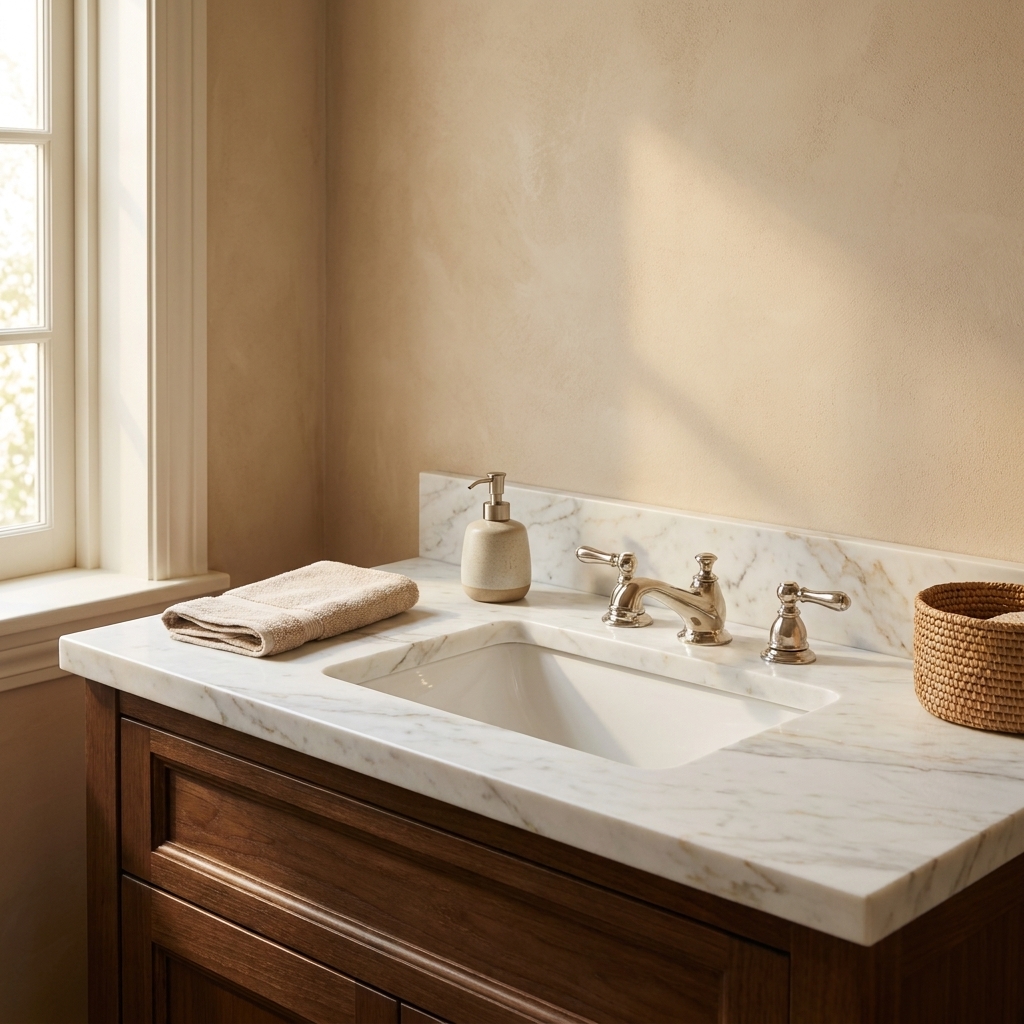
- Daily cleaning: pH-neutral cleaner only. Many “bathroom cleaners” are too acidic for marble.
- Sealing: Often every 6 to 12 months in kitchens, and sometimes annually in bathrooms, but it depends on the marble, the finish (honed vs polished), product use, and the sealer.
- Real talk: Sealer helps with stains, not etching. Etching is a chemical reaction on the surface. If you choose marble, choose it with your eyes open.
Designer confession from the field: The homeowners happiest with marble are the ones who treat it like a leather bag, not a brand-new white sneaker. It develops character. If that idea stresses you out, marble will stress you out.
Finish matters
Two slabs of the same material can live very different lives depending on the finish.
- Polished: Shiny, reflects light, usually the most stain-resistant “feel” because it is less textured. Etches on marble can still happen, but they may read as slightly less chalky than on a honed top, depending on lighting.
- Honed: Soft, matte look. It hides fingerprints and feels more relaxed, but it can show etches more obviously on marble because the etched spot may look lighter or different from the surrounding finish.
- Leathered: Textured (common with granite). It can hide smudges and add grip and depth, but texture can hold onto grime if you are not wiping it down regularly.
Lifespan and resale
Installed correctly, all three can last decades. The difference is how they look as they age.
- Quartz: Often looks nearly the same for 15 to 25+ years with normal use, provided it is protected from excessive heat. In very sunny rooms, ask about UV stability if the countertop is in direct sunlight for hours daily.
- Granite: 25+ years is common. It tends to age gracefully, especially darker, denser stones.
- Marble: Structurally long-lasting, visually changing. It can look stunning for decades, but it will show etching and wear patterns, especially in kitchens.
For resale, quartz and granite tend to be the safest bets for broad buyer appeal. Marble reads as luxury, but some buyers see it as high maintenance, especially in kitchens.
Best choice by room
For kitchens
- Choose quartz if you want the easiest day-to-day cleanup and predictable performance with kids, roommates, or lots of entertaining.
- Choose granite if you cook a lot, routinely deal with hot pans, or want natural stone toughness with a bit of maintenance.
- Choose marble if you love the look, bake frequently (it often feels cooler to the touch than many surfaces, depending on room conditions), and are fine with visible patina and etching over time.
For bathrooms
- Choose quartz if you want worry-free resistance to makeup, toothpaste, hair dye, and styling tools (a heat mat for hot tools is still a smart habit).
- Choose granite if you want a natural stone look with good durability and do not mind sealing.
- Choose marble if it is a lower-use bath, a powder room, or you love that spa-like, old-world look and can commit to gentle cleaning products.
Design and pattern
After durability and budget, design is the deal-maker.
Quartz: consistent, controlled
Quartz offers the most consistency. That is great if you want a clean, minimal look or if you are matching multiple surfaces across a kitchen and bath. Some quartz patterns mimic marble beautifully, but the veining can repeat in a way natural stone does not. Always view a full slab or large sample, not just a tiny chip.
Granite: natural variation
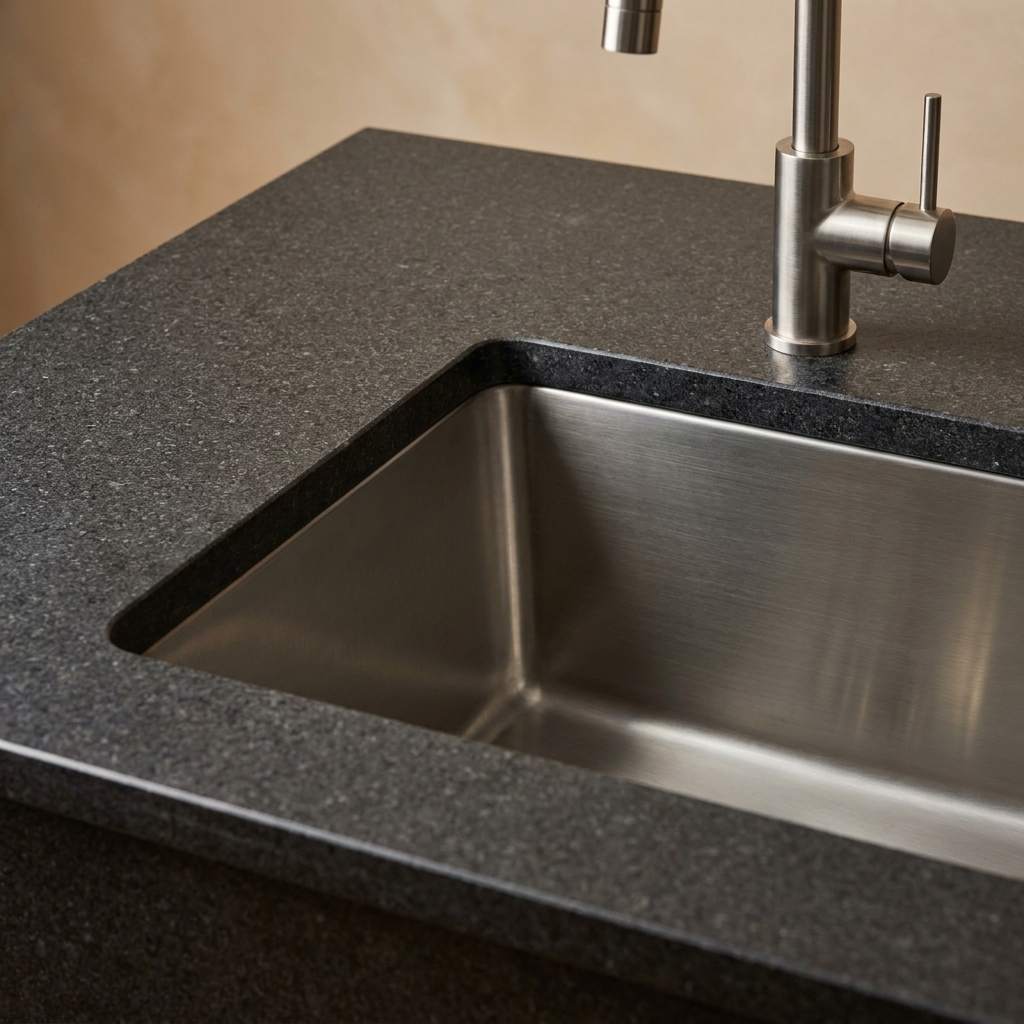
Granite has real depth and crystalline sparkle that engineered materials cannot fully replicate. The tradeoff is that you must choose the exact slab because two “same-name” granites can look wildly different.
Marble: timeless softness
Marble has a glow and softness that reads instantly high-end. In the right home, it is breathtaking. If you want the look with fewer headaches, consider using marble in a powder room, on a furniture-style vanity, or as a backsplash where it sees less abuse.
Outdoor use
If this is for an outdoor kitchen or a patio bar, do not assume all “stone” performs the same.
- Quartz: Often not recommended outdoors because UV exposure can fade or yellow some products over time, and heat plus sun can be hard on resins. If you are set on it, ask the manufacturer for outdoor and UV guidance in writing.
- Granite: Usually a strong outdoor option when properly installed and sealed.
- Marble: Can weather, stain, and etch outdoors. It can still be used, but it is a choose-the-patina lifestyle decision.
Installation details that matter
Even the best material can disappoint if the details are wrong.
- Overhang support: Large islands, waterfall legs, and seating overhangs may need hidden brackets or steel supports. This matters for all materials, especially if there are seams.
- Seams: More seams usually mean more visible lines and more potential weak points. Good fabricators plan seam placement around sink cutouts and natural pattern flow.
- Sink choice: Undermount sinks are popular, but they put more demand on the stone edge and the adhesive. A quality install and proper support is key.
- Edge profile: Simple profiles tend to chip less and are easier to keep clean. Ornate edges can collect grime and show damage faster.
How to choose: my checklist
If you are stuck, answer these honestly:
- Do you routinely set hot pans on the counter? Granite wins. Quartz requires strict trivet habits.
- Do you want truly low maintenance? Quartz wins.
- Are you sensitive to stains and “imperfections”? Avoid marble in high-use areas.
- Do you love natural variation? Granite or marble will make you happiest.
- Is this a kids-and-chaos kitchen? Quartz or a dark, dense granite is the stress-reducing choice.
- Is this a showpiece powder room? Marble can be a dream here with fewer consequences.
FAQ
Is quartz cheaper than granite?
Sometimes, but not always. Entry-level granite can be less expensive than mid-range quartz. High-end quartz can cost as much as or more than premium granite. The best way to compare is to pick 2 to 3 slabs you would genuinely use and price them with the same edge and cutouts.
Does granite really need to be sealed?
Usually, yes. Some dense granites barely absorb water and need sealing less often, but many stones benefit from periodic sealing for stain resistance. A quick water-drop test will tell you a lot.
Will marble always stain?
Not always, but it is more likely than quartz or sealed granite. Sealer buys you time to wipe spills before they soak in. It does not prevent etching from acids.
What is the difference between quartz and quartzite?
This one trips up a lot of shoppers. Quartz countertops are engineered stone (minerals plus resins). Quartzite is a natural stone. Quartzite can handle heat very well and looks more like natural marble movement, but it is typically priced and installed like other premium natural stones and may still need sealing. If a slab is labeled “quartzite,” ask the yard to confirm what it is and how it should be maintained.
Can I use bleach or disinfecting wipes on these countertops?
I do not recommend routine bleach on any of them. For quartz, occasional disinfecting wipes are often fine if the manufacturer allows it, but do not let harsh chemicals sit. For granite and marble, stick with pH-neutral stone cleaners. If disinfection is a concern, ask your fabricator for a stone-safe disinfectant recommendation.
Which countertop is best for a bathroom vanity?
Quartz is the most forgiving for everyday bathroom messes. Granite is a solid second choice if you are okay with sealing. Marble is best in lower-use baths or when you truly want that classic look and are willing to baby it.
Is engineered quartz safe?
For homeowners, the day-to-day safety concern is low. The bigger issue is during cutting and fabrication, where silica dust can be dangerous without proper controls. Choose a reputable, safety-compliant fabricator and do not DIY cut or grind stone indoors.
My bottom line
Pick quartz if you want easy living and consistent style.
Pick granite if you want natural stone toughness and strong heat resistance.
Pick marble if you are choosing beauty and patina on purpose, not by accident.
Whatever you choose, the best money you can spend is on a reputable fabricator. A great install makes an average slab look elevated, and a sloppy install can make a premium slab feel like a regret.