
A practical, designer-approved breakdown of quartz, granite, and marble: price ranges, upkeep, finishes, lifespan, and which material fits your kitchen or ba...
If you have ever stood in the middle of a demolished kitchen and thought, There has to be a better way than sending everything to a landfill, you are my kind of person. The good news is that an eco-friendlier kitchen does not have to look like a science project or blow up your budget. With the right material choices, you can reduce environmental impact and end up with a kitchen that wears well through real life: spilled coffee, hot pans, kids doing homework on the island, and all.
One quick truth before we get into materials: the greenest remodel move is often reusing what you can. Keeping existing cabinet boxes, refacing instead of replacing, refinishing a floor, or rehoming old doors and hardware can save a surprising amount of carbon and cash.
Below are five sustainable materials I regularly recommend when homeowners want a greener remodel without giving up performance. I will also point out the “gotchas” I have seen on job sites, because the most sustainable choice is the one that lasts.

What makes it sustainable
Sustainability is not one single label. In remodeling, I look at a handful of practical factors:
- Renewability: Does it regrow quickly, or is it slow and resource-intensive to harvest?
- Recycled content: Does it use waste materials that would otherwise be landfilled?
- Durability and repairability: Can it handle a kitchen’s daily abuse, and can you refinish or repair it instead of replacing it?
- Off-gassing: What is the VOC story for finishes, resins, and adhesives?
- Transport: Generally, the farther something travels, the bigger its footprint. Locally sourced wins when all else is equal.
- End of life: Can it be reused or recycled later, or is it basically destined for the dump?
Now, let’s get into the materials.
1) Bamboo flooring
Bamboo is a poster child for renewable materials because it grows incredibly fast. In kitchens, I like bamboo most when homeowners want a warm wood look but need something that can keep up with busy traffic.
Why it can be a good eco option
- Fast-growing renewable resource: Bamboo can mature in a few years, unlike hardwoods that may take decades.
- Tougher options exist: Strand-woven bamboo is often more dent-resistant than traditional bamboo, but performance varies by brand, finish, and construction.
Kitchen reality check
- Sourcing matters: Bamboo is frequently manufactured overseas and shipped long distances. If footprint is your top priority, compare it to locally available woods with responsible sourcing.
- Manufacturing matters too: Some bamboo products use higher-emitting adhesives or finishes. Ask specifically for TSCA Title VI / CARB Phase 2 compliance and look for low-emissions certifications such as FloorScore (or equivalent) when available.
- Check the specs, not the hype: If your household is hard on floors, ask for the warranty and a published hardness rating (many brands list a Janka number or comparable metric).
- Water is still the enemy: Bamboo is more stable than many woods, but standing water will still cause problems. Use mats at the sink and dishwasher and wipe spills quickly.
- Install details matter: In a kitchen, I prefer a quality underlayment and careful expansion gaps. If it is installed too tight, seasonal movement can cause buckling.
Best for: Homeowners who want a wood look with a greener story and are willing to treat the kitchen floor like a kitchen floor (read: clean up puddles).
2) Recycled glass countertops
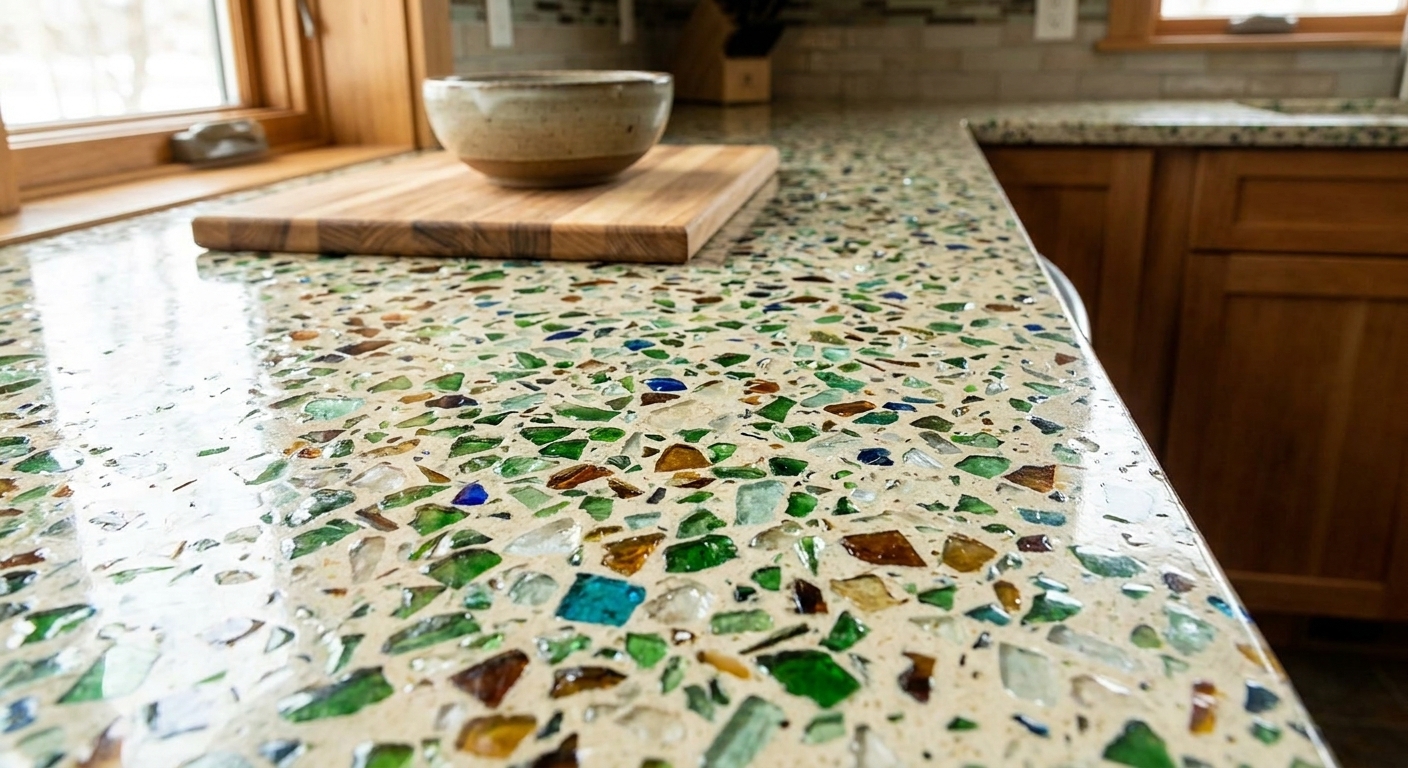
Recycled glass counters are one of my favorite “conversation piece” surfaces. They can look sleek and clean or playful and terrazzo-like, depending on the color mix and aggregate size.
Why it can be a good eco option
- Diverts waste: Uses post-consumer or post-industrial glass.
- Unique aesthetics: No two slabs look exactly alike, which is a fun bonus if you want a one-of-a-kind kitchen.
Kitchen reality check
- The binder is the whole story: Recycled glass counters use either a cement-based binder or a resin-based binder (and sometimes other hybrids). Resin can raise petrochemical content and emissions concerns. Cement-based versions may need sealing and can be more stain-sensitive depending on the product.
- Ask about sealers and maintenance: Do you need to seal it? How often? What cleaner is recommended? A countertop is only “low fuss” if you actually like the care routine.
- Heat and stain performance varies: Some products handle heat well, others are more sensitive. Always ask for care guidelines, especially around hot pans and acidic spills.
- Edge chips can happen: This is not unique to glass, but you want a skilled fabricator and a profile that fits your lifestyle. A slightly eased edge tends to be friendlier in busy kitchens.
- End-of-life note: Once glass is locked into a cement or resin matrix, it is not as straightforward to recycle as loose glass. Plan on it being a long-term surface.
Best for: Homeowners who want a standout countertop and are willing to follow the manufacturer’s care instructions like it is a recipe you do not want to ruin.
3) Reclaimed wood cabinetry
Reclaimed wood brings instant character, and it is hard to beat from a sustainability standpoint: it is wood that already exists, already harvested, already seasoned. When it is used thoughtfully, it can look high-end and soulful, not “rustic theme restaurant.”

Why it can be a good eco option
- Reduces demand for new lumber: You are reusing a material that would otherwise be discarded or underused.
- Built-in patina: Dings and grain variation read as charm, not defects.
Kitchen reality check
- Consistency can be tricky: If you want perfectly matched doors, reclaimed wood may frustrate you. If you want character, you will love it.
- Verify it is properly milled and dried: Old wood can still move if it was not processed correctly. Warped doors are not “patina.”
- Finish and cleaning: In kitchens, reclaimed wood should be sealed appropriately so it can handle grease and wiping. Talk through finish options with your cabinet maker.
- Ask the right sourcing questions: Reclaimed is reclaimed, but it should also be responsibly sourced and free of lead paint or other legacy contaminants. A reputable supplier should be able to speak to that clearly.
Design tip from my slightly obsessive storage brain: Consider reclaimed wood for island panels or a coffee station instead of every cabinet box. You still get the eco story and the wow factor, often at a lower cost and with easier consistency.
4) Paper composite countertops
Paper composite counters are made from recycled paper fibers combined with resins and pressed into dense slabs. They are not as widely known as quartz or granite, but they deserve a spot on the shortlist if you want something warm, matte, and modern.

Why it can be a good eco option
- Uses recycled content: The paper component is typically recycled.
- Can be repairable: Depending on the product and finish, minor scratches can sometimes be buffed or sanded out, which helps extend lifespan.
Kitchen reality check
- The resin system matters: The environmental and emissions profile can be heavily influenced by the resin (often phenolic, acrylic, or similar). Ask what resin is used and request emissions information.
- Look for third-party verification: If indoor air quality is high on your list, ask about certifications such as GREENGUARD (or equivalent). For food-prep comfort, check whether the product is listed as NSF compliant where applicable.
- Heat and water rules still apply: Use trivets, do not park hot pans directly on the surface, and wipe standing water around sinks.
- Edge and sink details matter: A good fabricator is everything, especially around undermount sinks where water exposure is constant.
- End-of-life note: Like many composite surfaces, resin-bound slabs are typically difficult to recycle. The sustainability win comes from durability and keeping it in service.
Best for: Homeowners who like a soft, honed look and want a countertop that feels less “stone cold” visually.
5) Recycled metal sinks and hardware
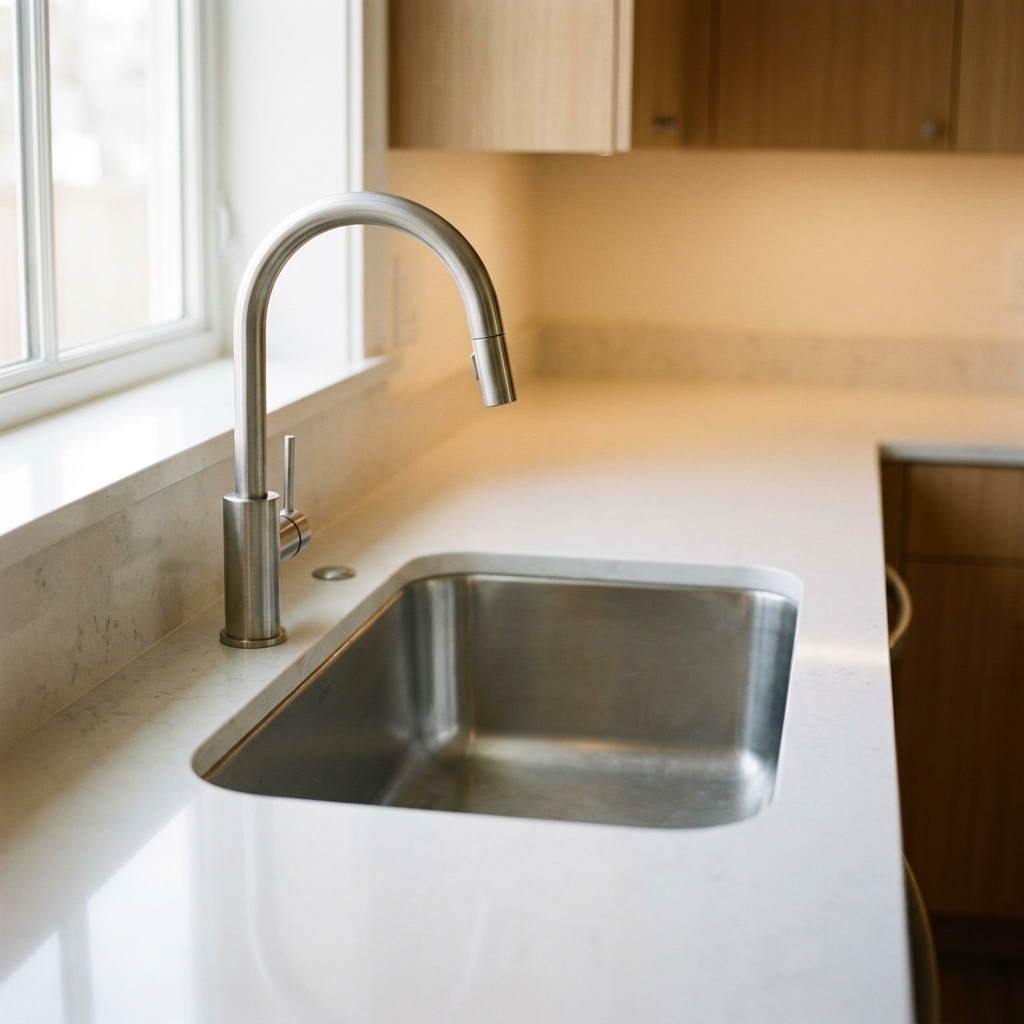
If you want an eco-friendly upgrade with real daily impact, do not overlook the smaller items you touch constantly. Many metal sinks and cabinet pulls are made with recycled content, and choosing quality pieces keeps them out of the replacement cycle.
Why it can be a good eco option
- Recycled content is common: Stainless steel, brass, and aluminum frequently include recycled material, but percentages vary widely by manufacturer.
- Long service life: A well-made sink and solid hardware can last through multiple kitchen refreshes.
Kitchen reality check
- Ask for numbers, not vibes: If recycled content is a priority, request the recycled-content percentage and, when available, an EPD (Environmental Product Declaration).
- Quality varies a lot: For stainless sinks, pay attention to gauge and sound-deadening. For hardware, look for solid construction and finishes that hold up.
- Choose classic shapes if you want longevity: Trendy hardware is fun, but classic silhouettes are easier to live with for 10 to 15 years.
Best for: Anyone who wants a sustainable win without changing the whole design direction.
Certs to look for
If you want to cut through marketing fast, these are the labels and documents I actually ask for:
- FSC (Forest Stewardship Council) for new wood products, including plywood when applicable.
- TSCA Title VI / CARB Phase 2 for formaldehyde emissions compliance in composite wood and many engineered products.
- FloorScore for hard-surface flooring indoor air quality (or a comparable low-emissions certification).
- GREENGUARD for low chemical emissions on certain finished products.
- EPD (Environmental Product Declaration) and HPD (Health Product Declaration) when manufacturers provide them. Not every good product has these, but when they do, it is a transparency win.
Green shopping checklist
- Reuse first: If your cabinet boxes are solid, keep them. If a floor can be refinished, refinish it.
- Ask for documentation: Recycled content claims, low-VOC information, and care requirements.
- Prioritize durability: A material that lasts 20 years is usually greener than a “natural” one replaced in 5.
- Plan for maintenance: If you hate sealing, do not pick a surface that needs regular sealing. Set yourself up for success.
- Work with installers who know the product: The greenest countertop in the world is not eco-friendly if it cracks because it was installed wrong.
- Have an exit plan: Ask your contractor about salvage and recycling options during demo. You would be amazed what can be donated or reclaimed when it is removed carefully.
FAQ
What is the most eco-friendly countertop?
It depends on your priorities. Recycled glass and paper composite can be strong options because they incorporate recycled content, but the binder or resin system matters. Reclaimed materials can be even better when available. The most eco-friendly choice is the one that fits your cooking habits and lasts without needing replacement.
Is bamboo actually good for kitchens?
Yes, especially higher-quality, strand-woven products, but treat it like any wood floor: wipe spills quickly, protect sink and dishwasher zones, and choose a product with verified low-emissions adhesives and finishes.
Can I mix sustainable materials without it looking mismatched?
Absolutely. A great combo is reclaimed wood on an island or open shelving, recycled glass or paper composite on a perimeter run, and recycled metal for the sink and hardware. Keep your main finishes consistent and let one sustainable element be the hero.
Bottom line
You do not have to remodel a kitchen perfectly to remodel it more responsibly. Reuse what you can, pick one or two sustainable upgrades that match how you actually live, invest in good installation, and choose finishes you will still like after the new-kitchen adrenaline wears off. That is how you build a kitchen that is kinder to the planet and kinder to your future budget.